Quantity:
Total:
Total products:
Total shipping: To be determined
Tax: 0 ₴
Total:
Girls' Asymmetric Latin Dance Skirts
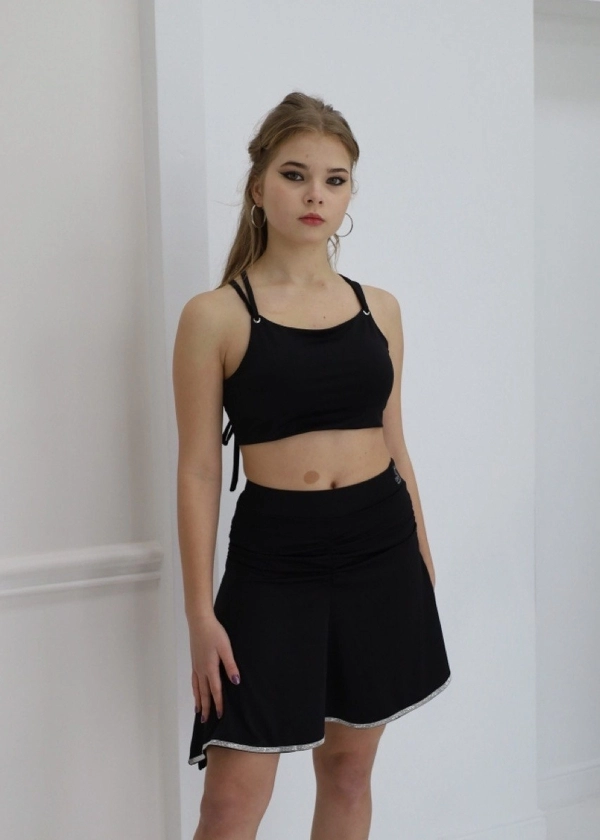
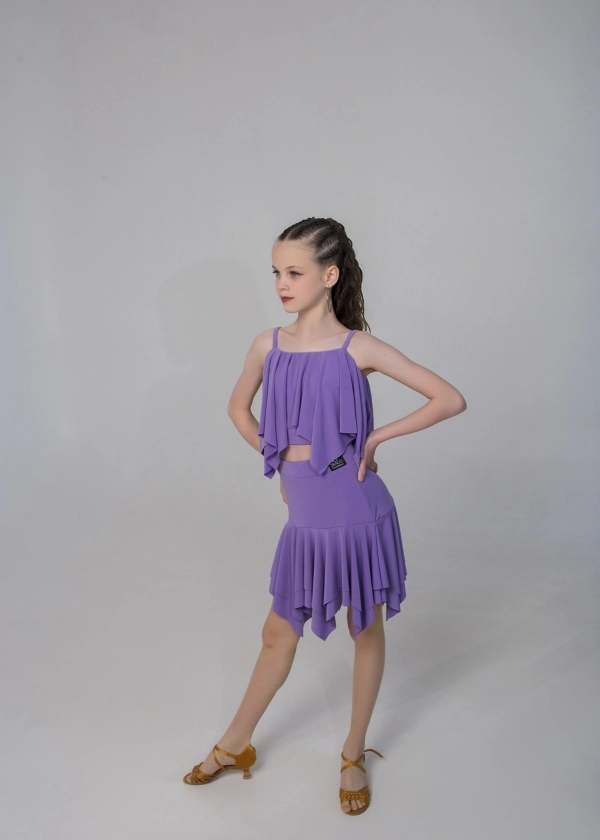
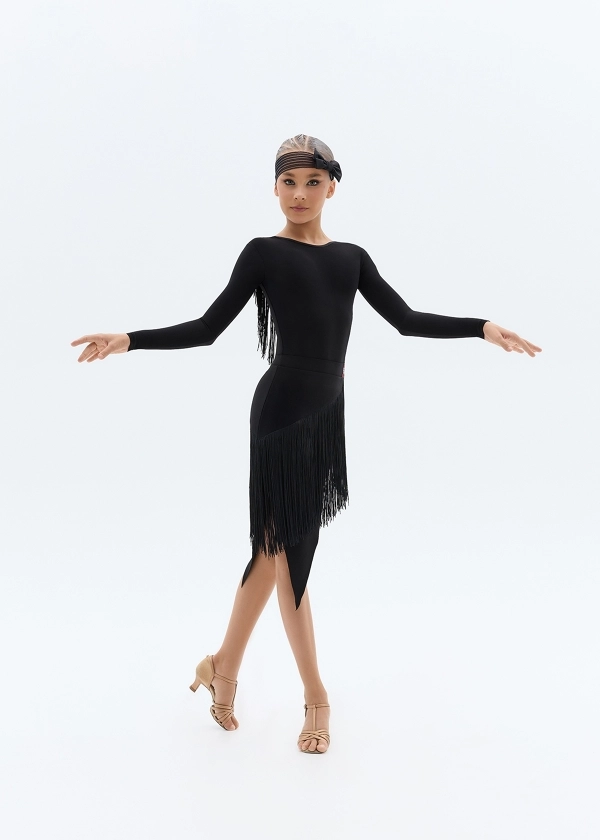
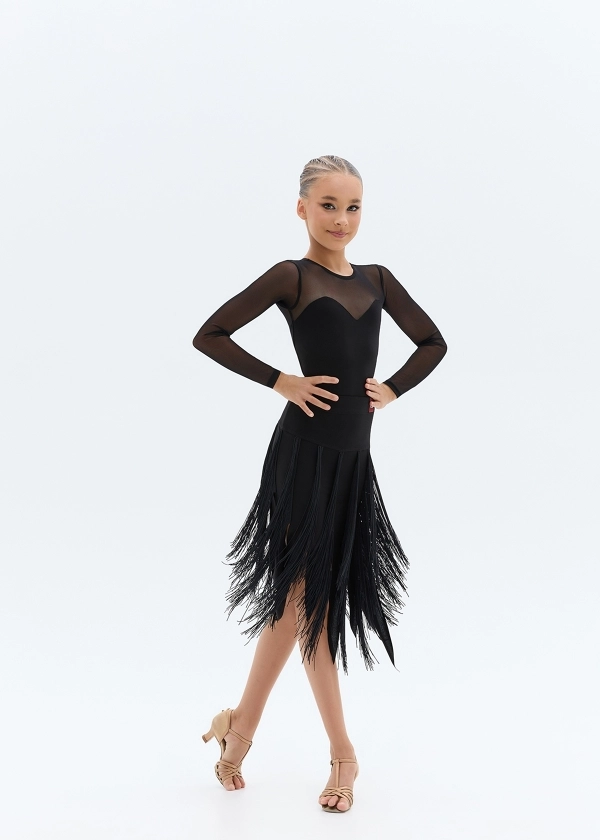
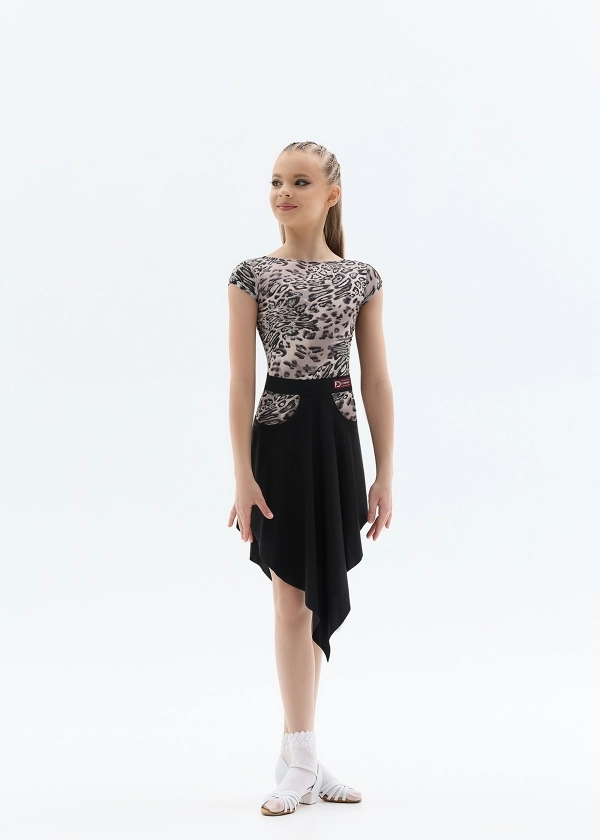

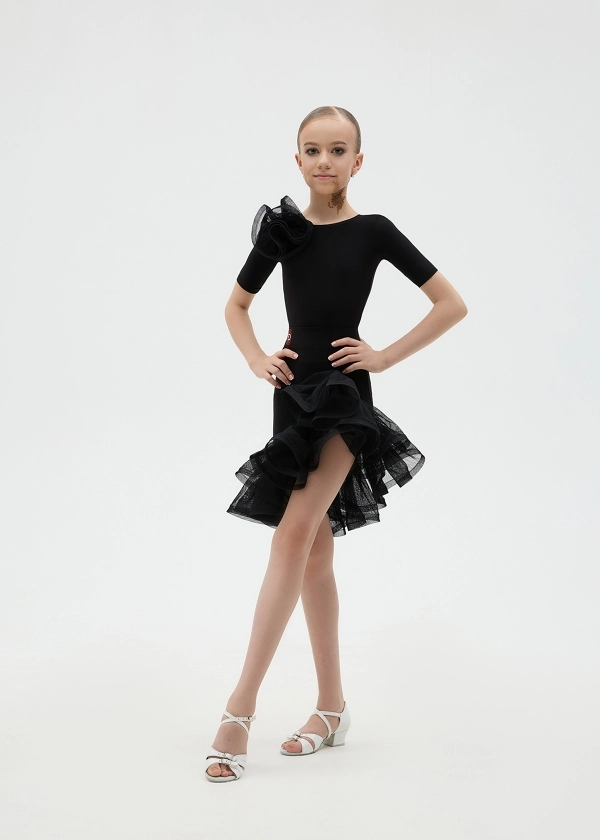
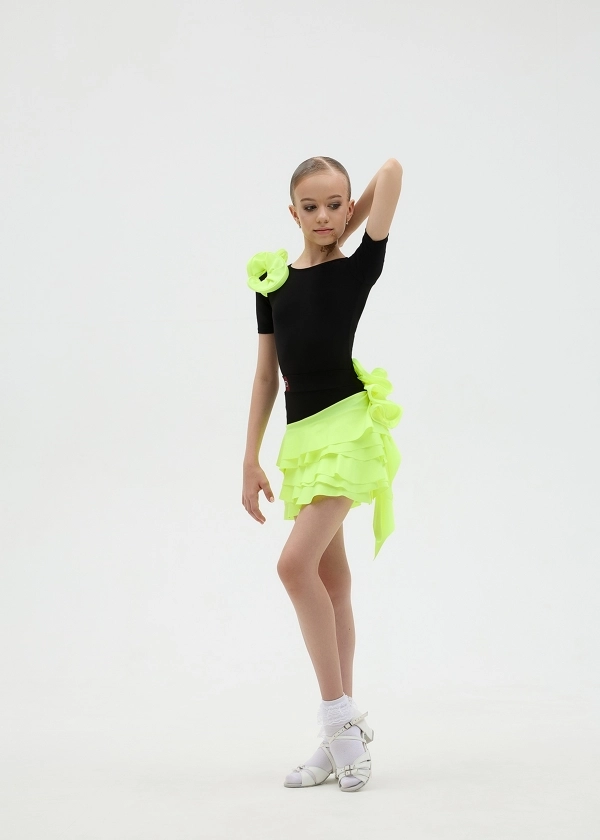


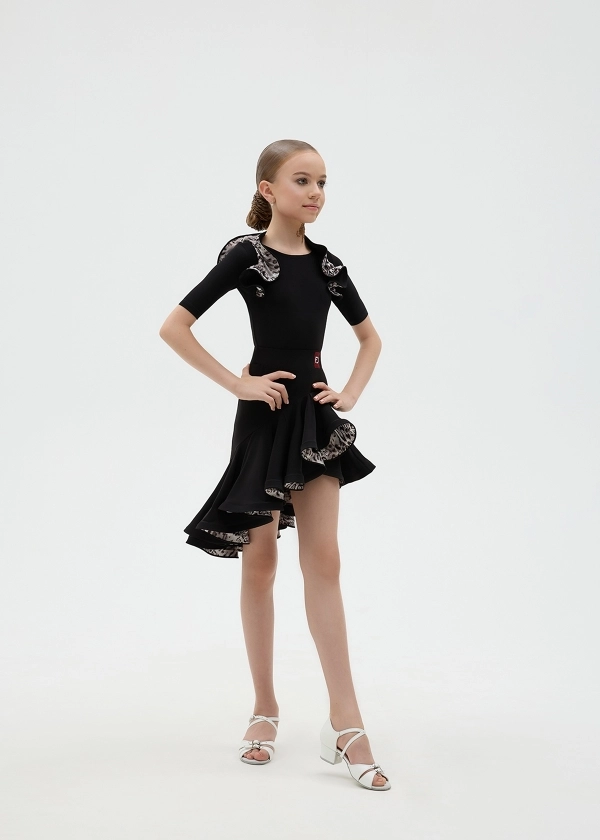

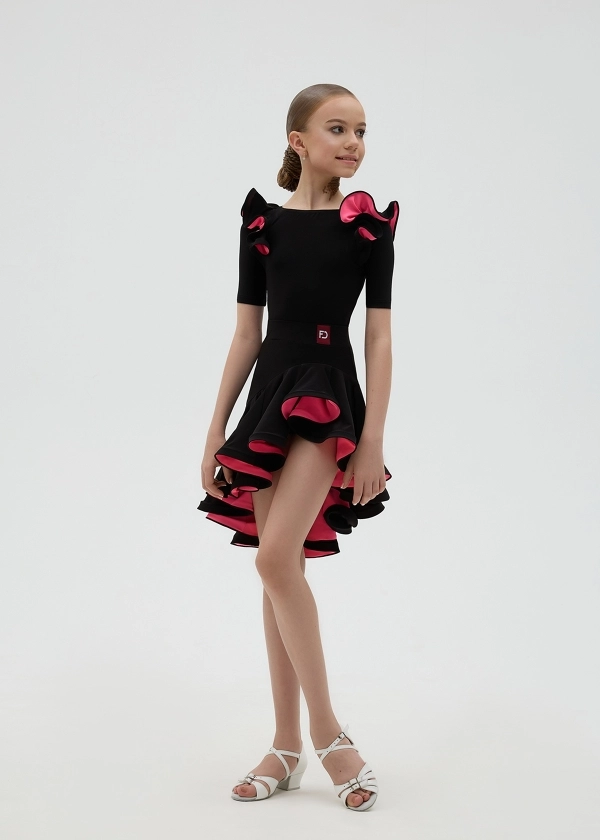


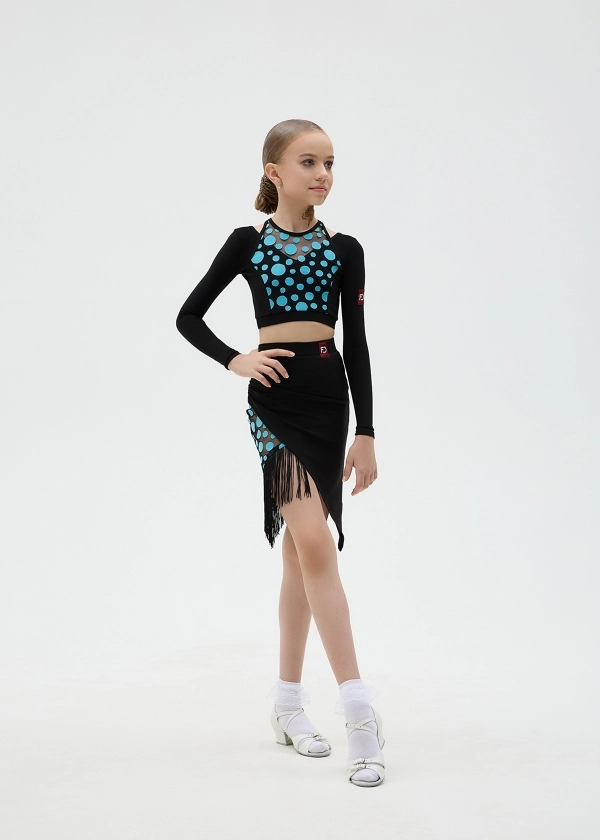

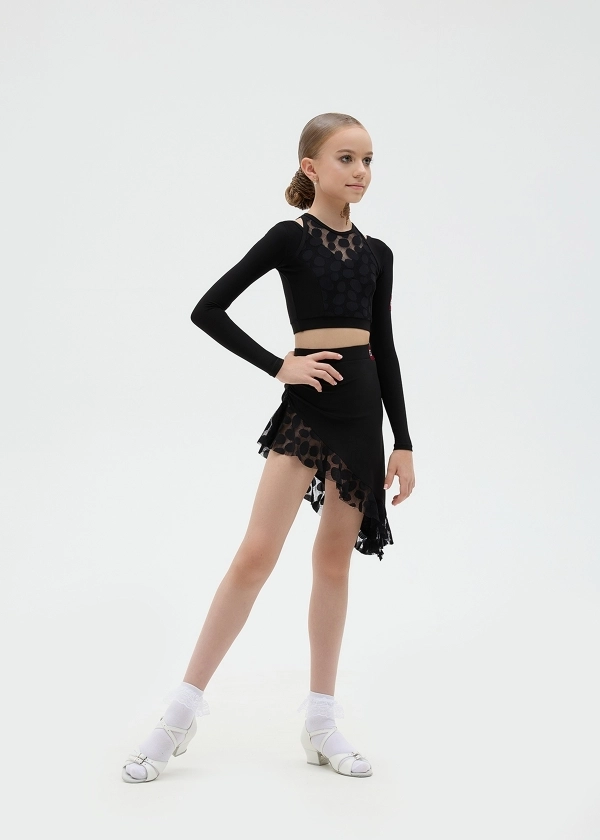

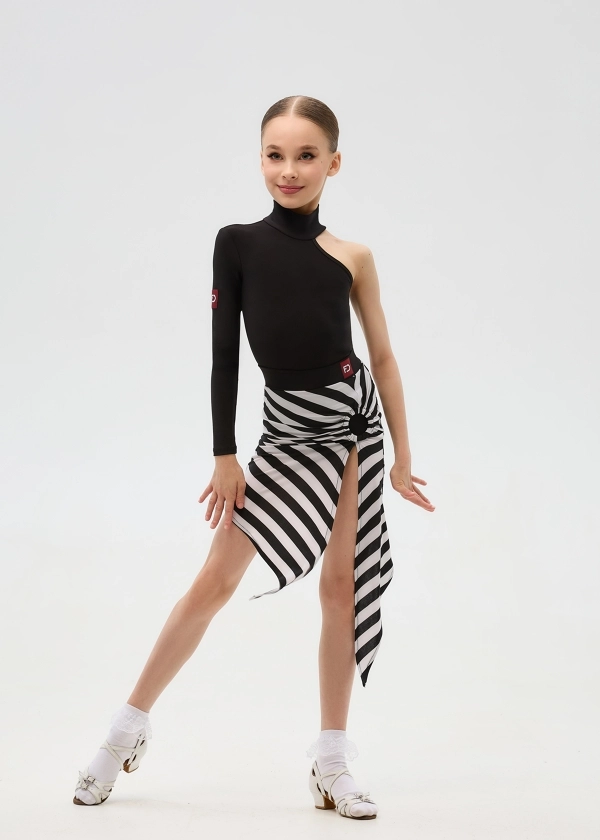
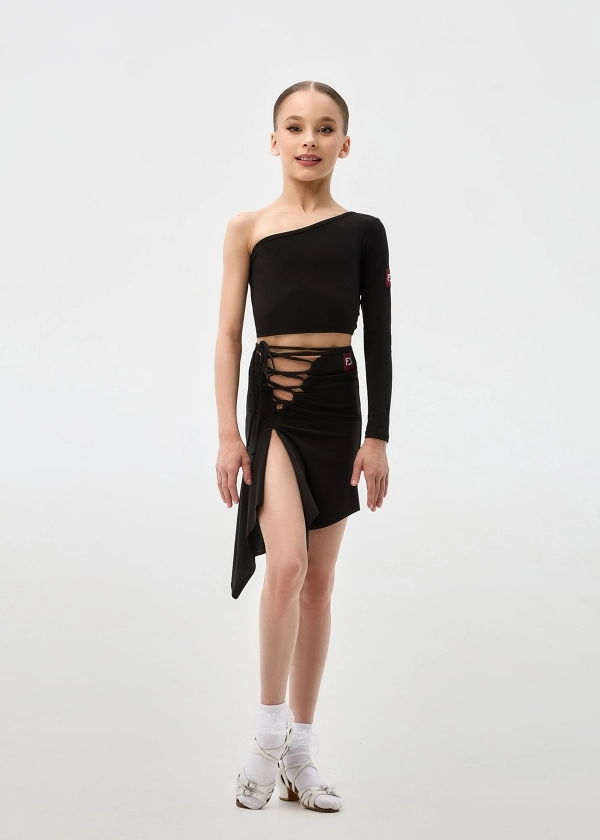
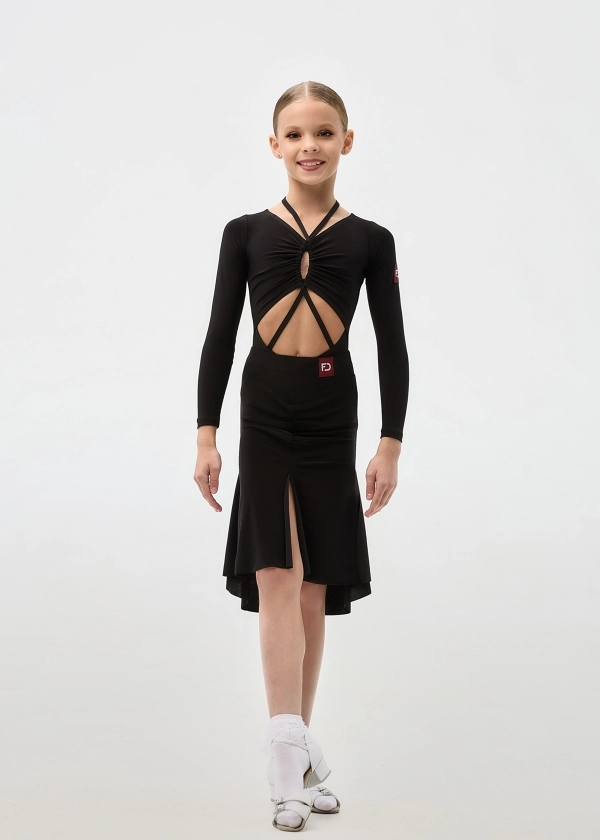
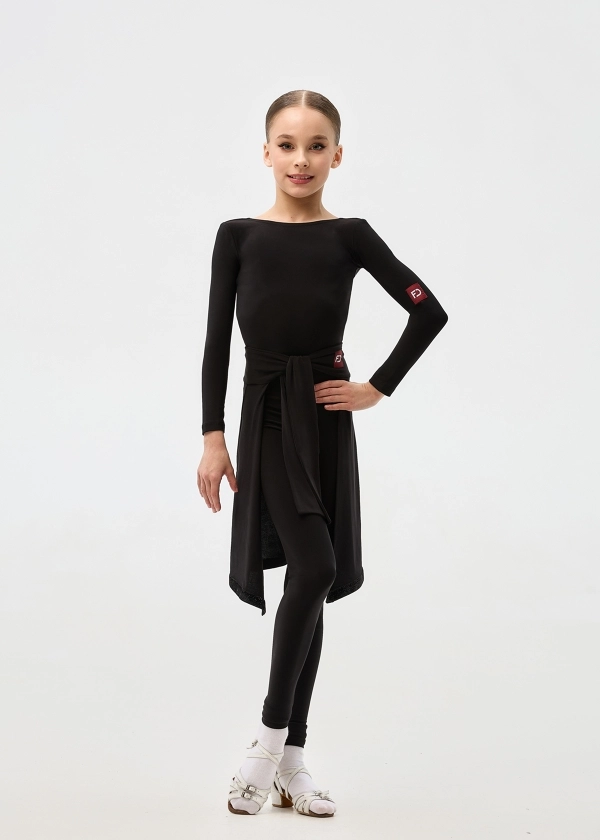
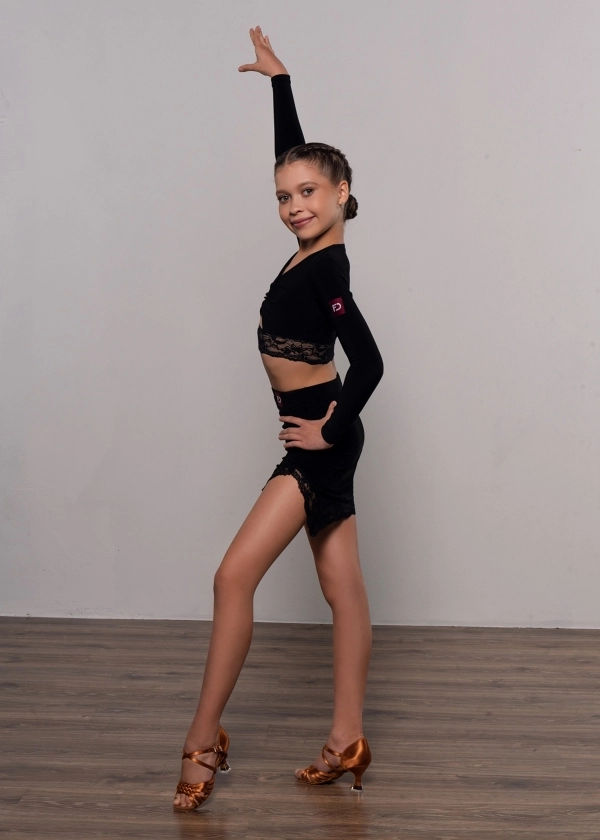
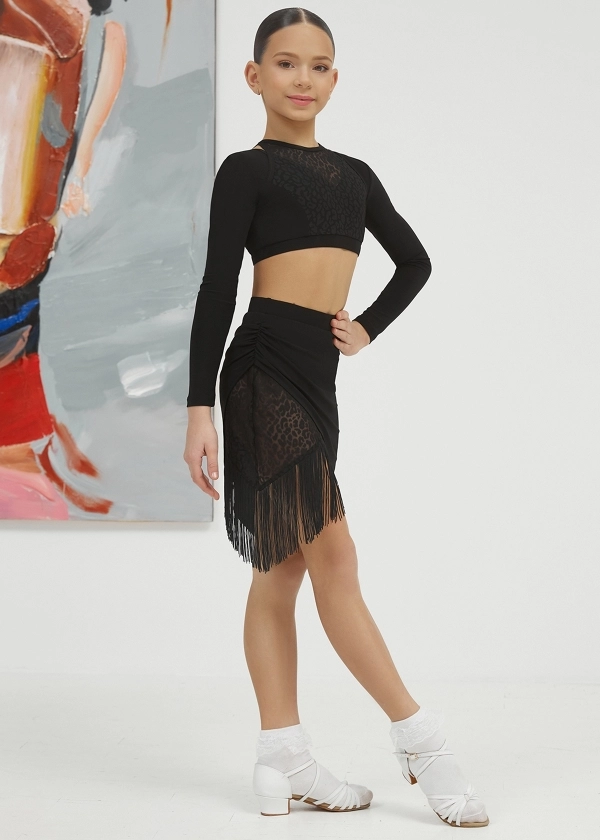

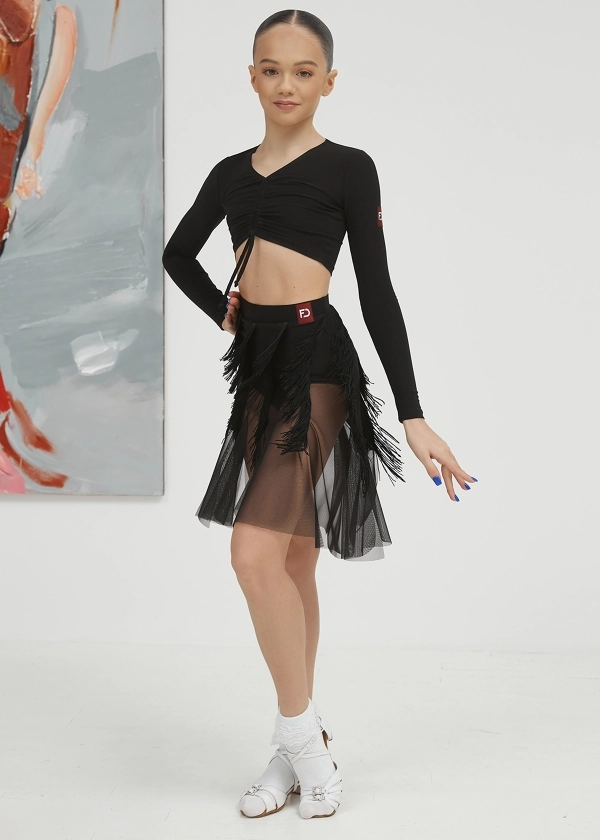
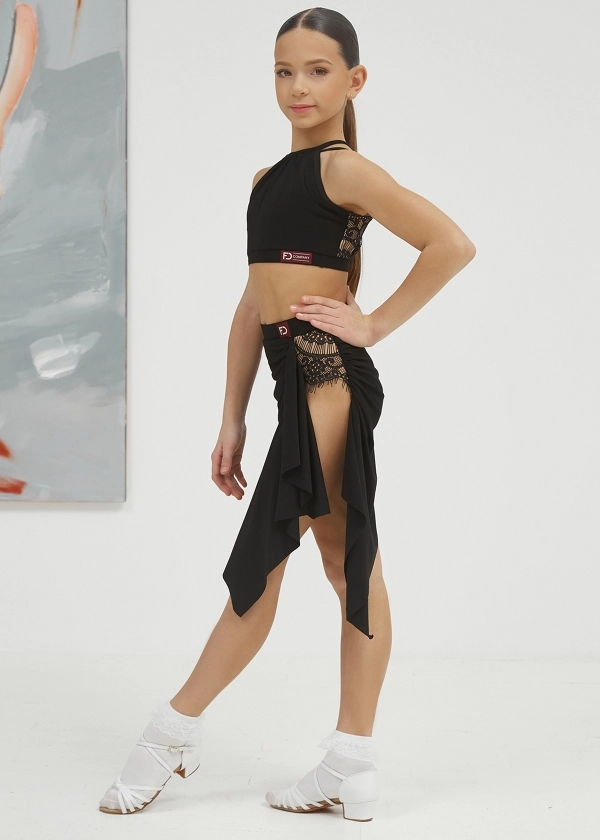
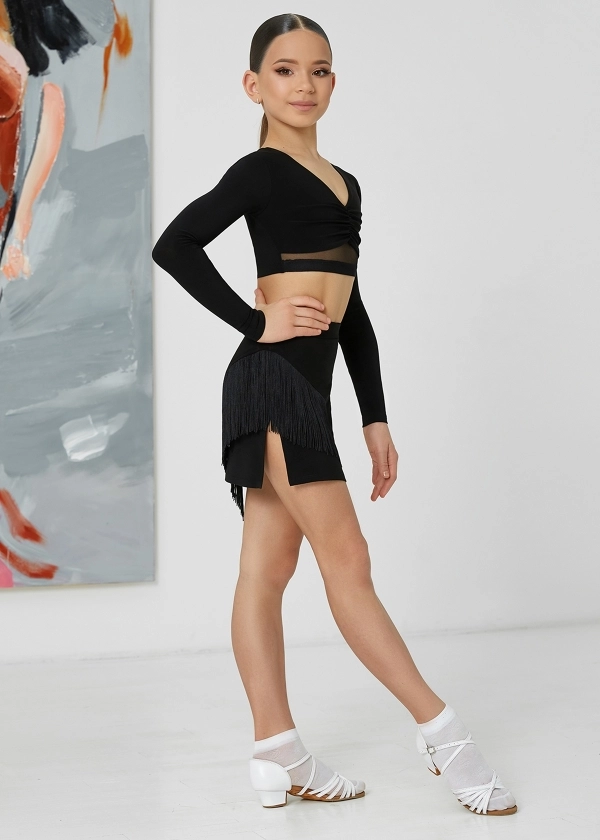
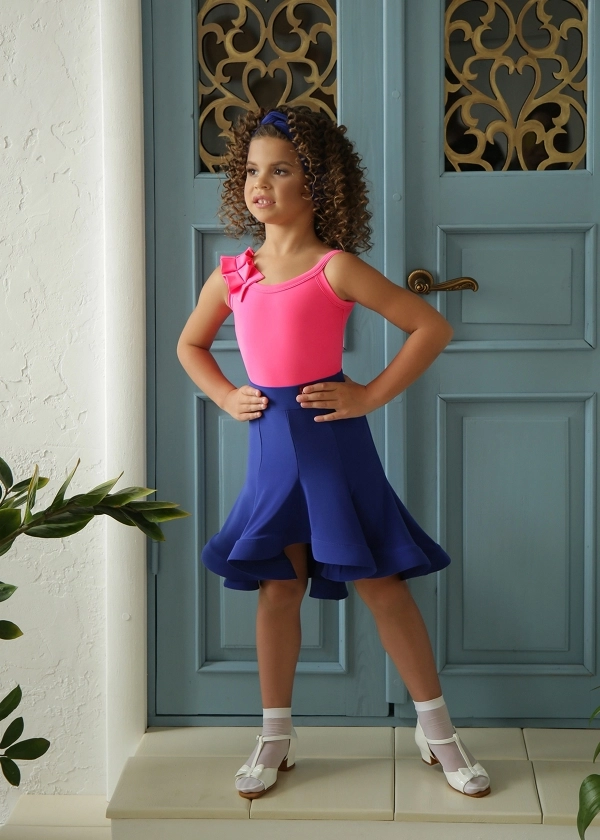
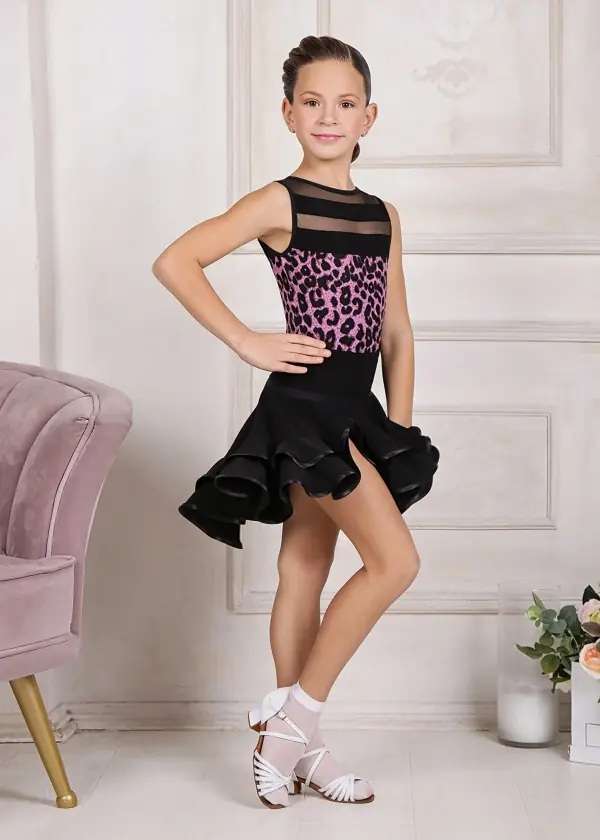
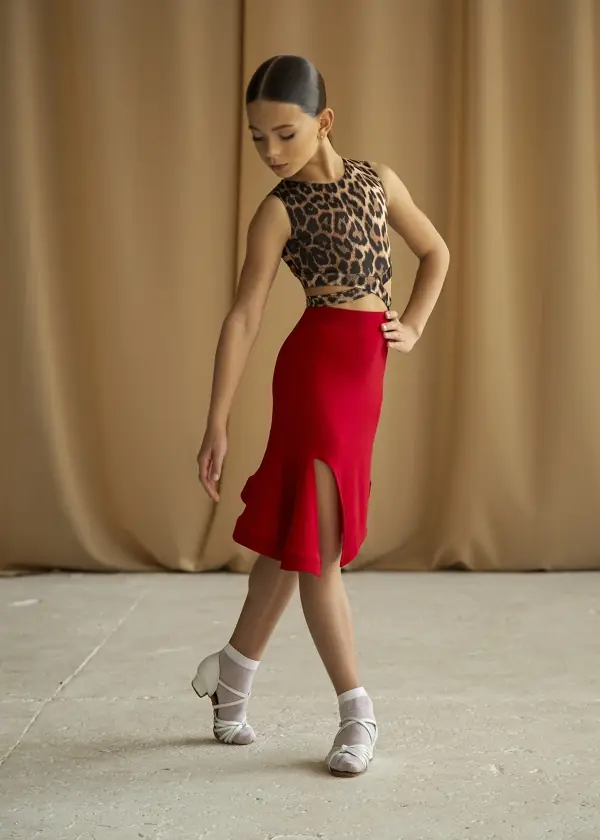
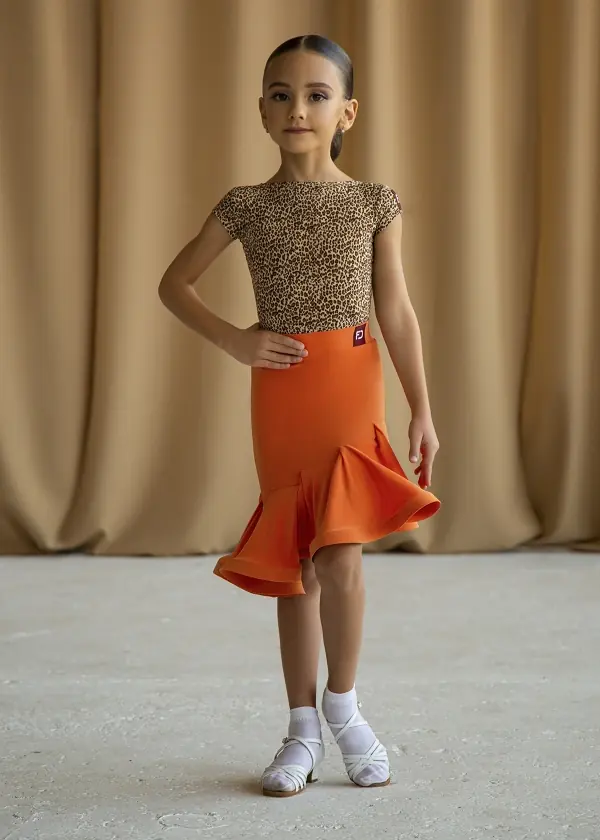
In Latin, an asymmetric skirt is not a fashion choice — it is a teaching tool. An angled or high-low hem shows the line of the leg and the direction of the hip more clearly than a level hem, which is exactly what a young dancer needs while she is still learning to make those actions visible. When a girl steps into a cha-cha lock or a rumba walk, the uneven edge draws a line that a coach and a judge can read at a glance. For juvenile and junior dancers building their first real Latin technique, that visual clarity is worth more than any decoration.
The MakGrace selection of girls' asymmetric Latin skirts is chosen with a young body and federation expectations in mind. These are skirts with a diagonal cut, a longer side, or a soft cascade — never so long that the hem catches the foot during a quick turning step. The fabrics are practical: biflex for durability and a crisp return, crepe or 'maslo' for a softer, more flowing fall. Both have enough weight to fly open in motion and settle back without creating chaos around a child's frame.
What the asymmetric cut does on the floor
An uneven hem lengthens the vertical of the leg, which matters in Children and Juvenile categories where clean line presentation earns marks for artistry. Because the volume is distributed unevenly, the skirt keeps moving even on small accents, so a young dancer feels the rhythm in the fabric and learns to play with it. The longer side trails behind a side step and snaps back on the close — a built-in feedback loop that tells her whether the hip action finished or stopped short.
Construction made for juveniles and juniors
Built-in briefs are essential at this age — they give a girl the confidence to dance high leg actions and kicks without thinking about coverage. A wide elastic waistband holds the skirt at the natural waist without digging in, keeping one continuous line from ribcage to hem when paired with a bodysuit or a top. For younger dancers, a moderate asymmetry is safer than a dramatic one: enough angle to read on the floor, not so much length that the edge becomes a tripping risk during fast travelling figures.
What parents check before buying
Three things settle most decisions. First, fabric: biflex is the most hard-wearing and forgiving for daily class, while crepe gives a softer wave for a child who already moves well. Second, length: measure from the natural waist and lean shorter rather than longer for the youngest dancers. Third, pairing: in Latin the rule is that a busy skirt wants a plain top, so an expressive asymmetric hem sits best over a clean bodysuit rather than a heavily decorated one.
Common questions
Will the asymmetric edge get in the partner's way in a couple?
No. A proper dance cut places the longer panels where they trail away from the contact zone, not toward the partner's feet. The skirt is designed to move with the dancer's own action and settle clear of the space between the couple, so it does not interfere with footwork on either side.
What should a girl wear on top with this skirt?
For Latin the cleanest combination is a simple bodysuit or a plain top without heavy décor. The principle of ballroom styling holds even at junior level: the more complex the skirt, the simpler the top should be, so the eye reads the line of the body and not a competition of details.
Is an asymmetric skirt suitable for club competitions and exams?
Yes. Asymmetric models are well suited to attestations, open lessons and club tournaments where a strict basic-wear regulation is not required. They let a young dancer present her line and rhythm properly, which is exactly what those early-stage events are assessing.
Browse more: all girls' skirts, girls' Latin skirts, girls' bodysuits, girls' tops, girls' dresses.