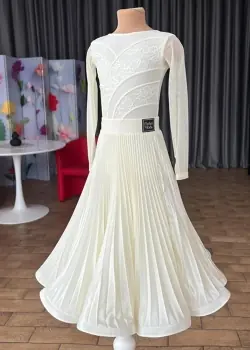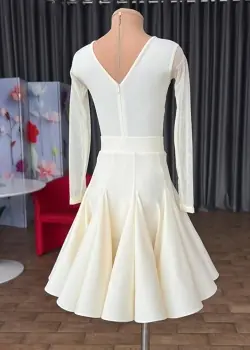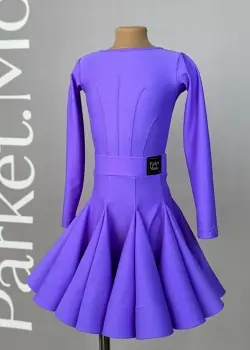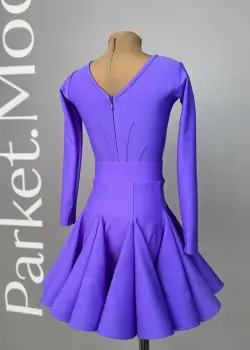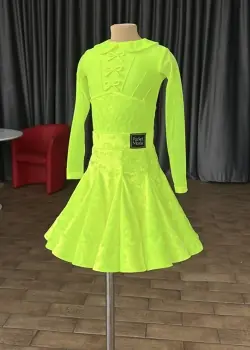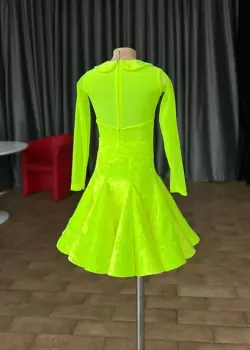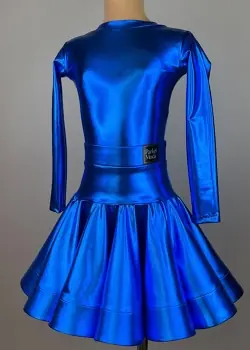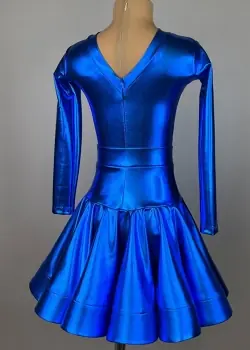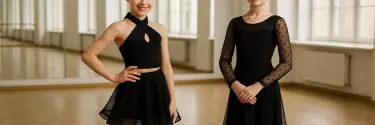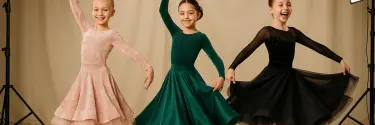

This is a comprehensive guide for parents and coaches: we explain the requirements for **juvenile** dresses (category up to ~12 years), how not to fail dress-code control at a competition, how to achieve the perfect fit, and what to look for when buying — from cut and materials to shoes, color, and care. We’ll show real examples from PARKET.MODA and suggest other options from the “Dresses (Girls)” section.
Updated: August 2025 • Focus regions: Ukraine and Europe (Poland, Czechia, Germany, etc.).
Why the “right” dress matters so much right now
The Central European season is packed with starts for juvenile dancers: ranking and open competitions run monthly. Dress-code control before stepping on the floor is strict in this age group. If a dress doesn’t meet the rules (length, color, decoration, materials), you may get warnings or even be denied entry. That’s why it’s essential to choose designs engineered specifically for juvenile regulations rather than “adult” variations.
Types of dresses: basic, ranking, and competition (Latin/Standard)
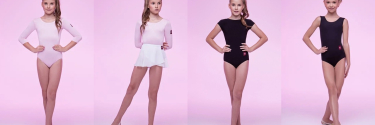
- Basic — minimalistic solutions for first practices and early starts. Stretch fabrics, clean silhouette, comfort. A great “room to grow” option thanks to the two rows of snaps in the bodysuit.
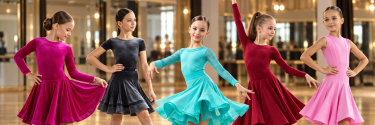
- Ranking — more considered cutting (stand collar, sleeve, pleats), often with a set of two detachable skirts (shorter for Latin and fuller/pleated for Standard).
- Competition — precise fit, “clean” outline, expressive color. In juveniles no rhinestones/shine — instead, fabric quality and line work make the look stage-ready.
By program:
- Standard — a longer, fuller skirt, even hem, pleating, smooth “drawing” in motion.
- Latin — a shorter flared skirt that highlights dynamics and accents.
Juvenile dress code: what federations (WDSF/WDO/WDC) typically require
Below is a concise digest of widely applied juvenile rules (a safe guideline for selection):
- Color: single color (mono). Not nude and not black.
- Materials: sheer elements only with same-color lining. Pleats and draping are allowed. No fabrics with shine/metallic.
- Décor: no rhinestones, sequins, glitter, fringe, feathers, or “light effects.”
- Skirt: 1–4 half-circles (up to 2 circles); ruffles are usually prohibited; a soft fishing line in the hem may be allowed to keep an even edge.
- Length: no higher than ~10 cm above the knee and no lower than the bottom edge of the kneecap.
- Neckline/back: modest; a small “teardrop” opening at the back is fine. Deep necklines/open sides — no.
- Sleeves: may be sheer, but the overall look must remain modest.
- Shoes: for girls — block heel up to ~3.5 cm.
- Tights: matte; fishnet is usually prohibited.
- Hair/make-up: make-up is not allowed for juveniles; hair neatly secured.
Tip: if unsure about length or fabric — choose the more conservative option. It reduces the risk at pre-floor control.
Materials & techniques: comfort, aesthetics, durability
- Velvet: soft, “stage-friendly,” keeps shape neatly; looks expressive under spotlights, yet without shine.
- Biflex/microfiber: excellent stretch, breathable, doesn’t restrict movement; easy care.
- Elastic mesh: for sleeves and inserts; in juveniles always lined with the same color in “sensitive” areas.
- Pleated fabric: for the Standard skirt — creates a beautiful vertical “drawing” and volume without extra décor.
- Built-in bodysuit: two rows of snaps — practical, “room to grow”; flat elastic seams — comfortable for practice and performance.
Fit & cut: how to know the dress truly fits
- Waist/shoulders: no pulling or creases; shoulder seam doesn’t slip.
- Length: check barefoot, standing straight; hem even all around.
- Sleeve: a long sleeve is the most versatile; should not pinch the wrist or twist at the elbow.
- Collar: stand collar or rounded neckline; no deep cuts.
- Latin/Standard balance: consider sets with detachable skirts — they save budget and time between rounds.
Color: choosing a shade that “works” on the floor
For juveniles, clean monochrome shades work best: powder pink, champagne, saturated red, classic blue/burgundy, vivid green, lemon, purple. Choose a hue that contrasts with floor tone and venue lighting without being “shouty.” It’s important that the color doesn’t erase the silhouette in shadows and gives a clean outline in motion.
Care & storage
- Washing: delicate cycle, cold water; no aggressive bleaches.
- Drying: flat; avoid direct sunlight.
- Ironing/steaming: through a thin cloth/inside-out to preserve pleats and velvet pile.
- Transport: garment bag + hanger; store skirts uncrumpled.
Common mistakes & how to avoid them
- Hem too short — risk of warnings; keep a 1–2 cm safety margin.
- Shine/rhinestones/metallic — usually “no” for juveniles; don’t experiment.
- Insufficient lining under sheer areas — not acceptable.
- Heel too high — keep girls’ block heels up to ~3.5 cm.
- “To grow into” without fit control — the dress hangs and impairs technique. Two rows of snaps beat “oversize” everywhere.
About the season & regions: Poland, Czechia, Germany
Poland has set the pace for children’s competitions in the region for several years: frequent ranking events, convenient logistics, and strong line-ups. Czechia and Germany offer stable calendars that are easy to plan a season around. We recommend preparing the look in advance: check length and linings, fine-tune waist/sleeve, test shoes and tights.
PARKET.MODA model examples (juvenile)

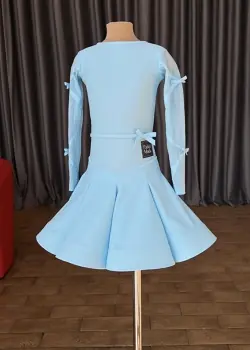
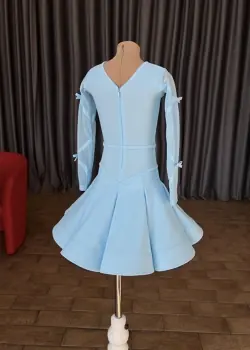
Powder — softness & modernity
Velvet and mesh, geometric lines, stand collar. Two skirts in the set: Latin (flared) and Standard (pleated). Double-row snaps in the bodysuit.

Champagne — lace & lightness
Floral lace with satin accents, sheer sleeves, refined back. Two skirts: voluminous (Latin) and longer airy (Standard).
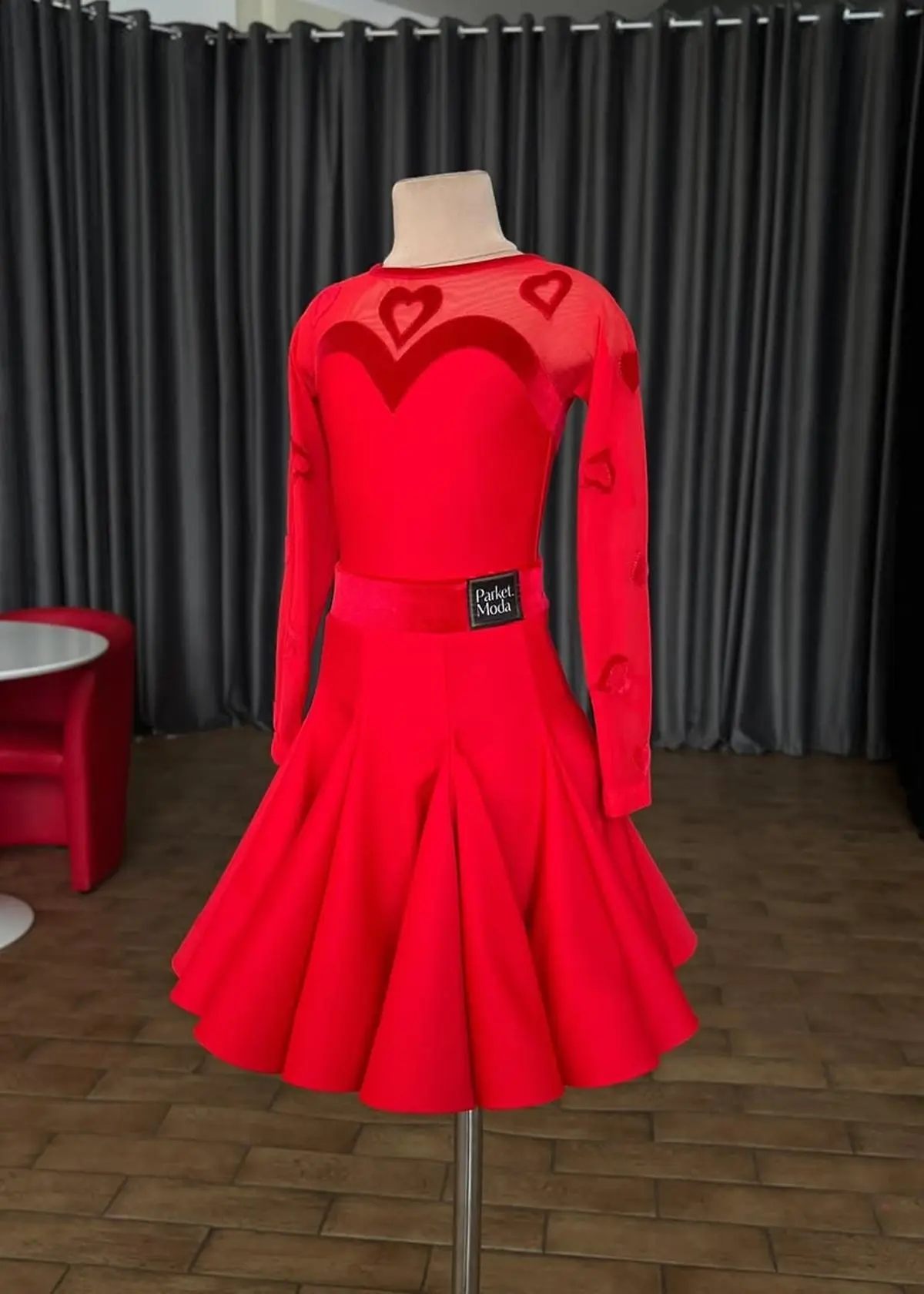
Red — brightness & romance
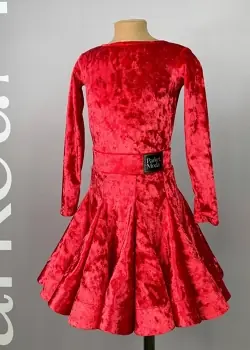
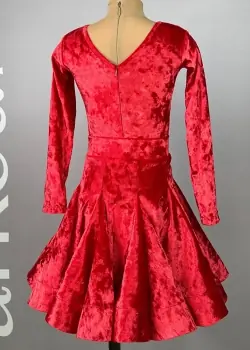
Rich red, velvet heart appliqués, sheer mesh on shoulders/back. Latin/Standard set, double-row snaps in the bodysuit.

Black — classic & graphic
Classic black top with graphic flock motif on the back, stand collar, sheer sleeves. Two skirts for both programs.
See more models on the PARKET.MODA brand page.
More options from MakGrace: basics, ranking & competition
Beyond exclusive PARKET.MODA, we offer a wide choice in “Dresses (Girls)”. The selection below includes proven options for practice, ranking, and competitions. See photos and full specs on product pages.
Dress with detachable skirt “Caribbean blue” | PARKET.MODA
Dress with detachable skirt “Apple green” | PARKET.MODA
Dress “Pink” (with detachable skirt) | PARKET.MODA
Dress “Yellow” (crushed velvet) | PARKET.MODA
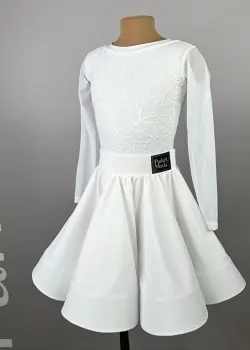
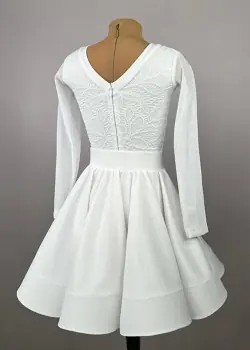
Dress “White” with detachable skirts (Latin/Standard) | PARKET.MODA
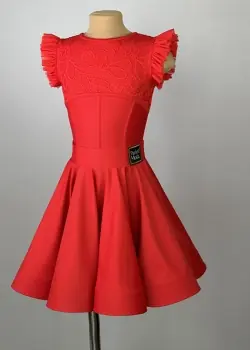
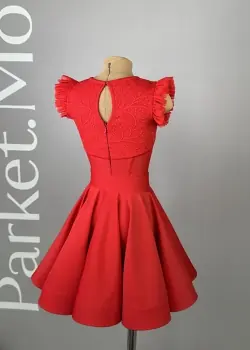
Dress “Red” (lace, short ruffled sleeve) | PARKET.MODA
Need advice? Chat with us — we’ll suggest the right cut and length for your upcoming events, do complimentary tailoring, or make a custom piece.
How to take measurements in 5 minutes (for a first-try perfect fit)
- Height — without shoes, to the millimeter.
- Bust/waist/hips — tape parallel to the floor; don’t overtighten.
- Back/shoulders — check width so the sleeve doesn’t pinch.
- Sleeve length — from shoulder seam to wrist, arm slightly bent.
- Dress length — with the juvenile “knee rule” in mind.
At MakGrace we tailor for free to improve fit or produce made-to-measure if needed.
FAQ: quick answers
Are rhinestones/shine allowed for juveniles?
No. Juvenile categories usually prohibit rhinestones, glitter, and fabrics with “metallic” or “light effects.”
What skirt length works?
Around the knee line: not higher than ~10 cm above the knee and not lower than the bottom of the kneecap.
What heel height is allowed for girls?
Typically a block heel up to ~3.5 cm.
Are sheer sleeves permitted?
Yes, but the overall look must remain modest; sheer areas in sensitive zones must be backed with same-color lining.
Can one dress cover both programs?
Yes. Choose a set with two skirts (Latin/Standard) — it’s the most practical solution for juveniles.
Ready to choose a dress?
Go to “Dresses (Girls)” or visit the PARKET.MODA brand page. Our specialists will help with size, cut, and color; we’ll tailor for free or make a custom piece. We ship right after payment — in time for your next competition.