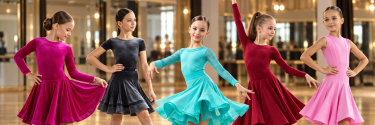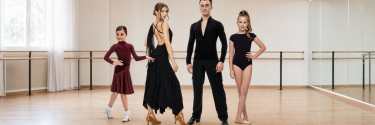
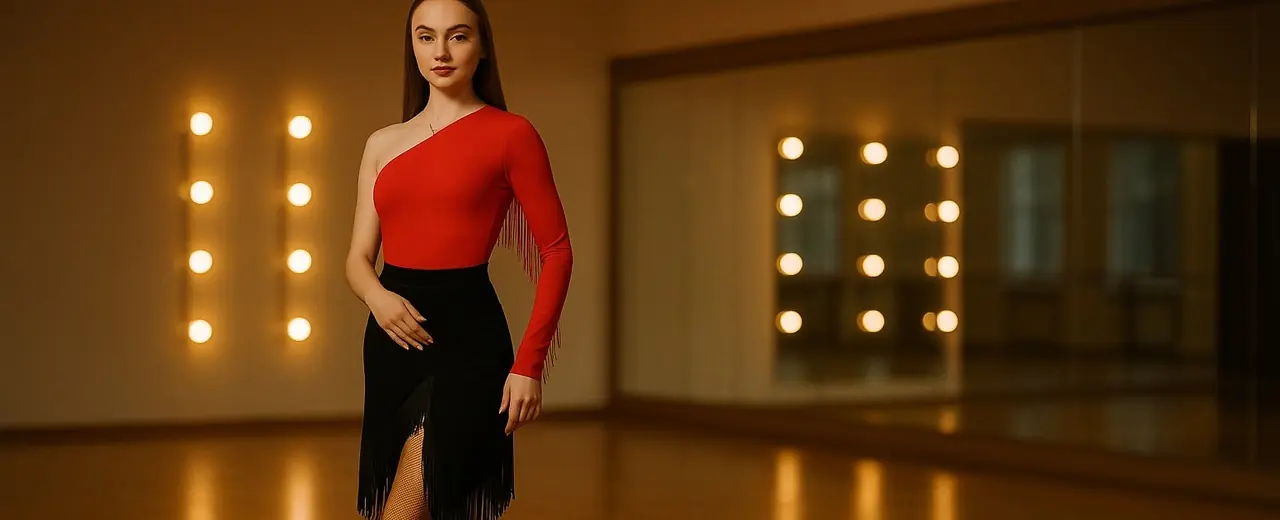
A fringe skirt is the most common training garment in Latin dance: fringe amplifies hip movement and gives the coach a live indicator of technique quality. For training, choose short fringe (10–15 cm) in polyester on a bi-flex or oil-fabric base — it will hold its shape through hundreds of sessions.
Why fringe is more than decoration
The fringe skirt became a symbol of Latin dance for a reason. Fringe appeared in ballrooms in the 1920s and has remained an essential part of the Latin style ever since. The reason is simple: fringe amplifies every movement and makes it more expressive.
In Latin dance, the coach watches hip and torso movement — this is the foundation of samba, cha-cha, rumba and jive technique. Fringe responds to every subtle hip displacement: if the movement is executed correctly, the fringe flies out to the side, emphasising the range of motion. If not — it stays still. For a coach, fringe is a live indicator of hip action quality.
During a spin, fringe opens out horizontally, creating the effect of a "blooming flower". This visual impact is what makes Latin dance so spectacular — and why no other garment detail can replace it.
Fringe skirt vs fringe dress
Both options are popular in ballroom dance, but they serve different purposes.
A fringe skirt is the classic choice for training. It's worn over a bodysuit and gives maximum flexibility: you can change bodysuits to suit your training, and easily switch between Latin and Standard blocks (take off the short fringe skirt, put on a long practice skirt). The coach can fully see your body at work.
A fringe dress is an all-in-one look. It works better for performances and shows where a unified appearance matters. For everyday training it's less practical, though many dancers prefer it.
For a first purchase, we recommend a skirt: it's more versatile, pairs with any bodysuit and is easier to incorporate into a training wardrobe.
How to choose a fringe skirt: 4 parameters
Fringe length
Fringe length directly affects how it moves and how easy it is to train in.
- Short fringe (10–15 cm) — ideal for training. Doesn't interfere with footwork, doesn't slow movement, doesn't overheat in the studio. The best choice for beginners and intensive practice.
- Medium fringe (15–22 cm) — the classic. Suitable for both training and performance. Creates a beautiful effect during spins without restricting technique.
- Long fringe (25–30 cm+) — for performances and competitions. Maximum visual impact, but takes getting used to: at first, long fringe can be distracting from technique.
Fringe density
Density (the number of rows of fringe) determines the weight and effect of the skirt. Dense fringe looks more luxurious but is heavier — noticeable over a long training session. Lighter fringe is more breathable and creates a wider spread during spins. For everyday training, choose moderate density.
Skirt base fabric
- Bi-flex — the best choice. Fits closely, holds its shape, doesn't stretch out even after hundreds of training sessions. Wicks moisture and dries quickly.
- Oil fabric (matte jersey) — a softer option. Less rigid against the skin, well suited for younger dancers. Holds its shape just as well.
Fringe material
- Polyester — perfect for training. Survives machine washing, doesn't knot up, keeps its shape after hundreds of sessions.
- Silk-like materials — for performances. More spectacular sheen but requires hand washing and careful handling.
Training fringe vs performance fringe
| Parameter | Training | Performance |
|---|---|---|
| Fringe length | 10–20 cm | 20–30+ cm |
| Density | Moderate | Maximum |
| Fringe material | Polyester | Silk / luxury polyester |
| Decoration | No crystals | Crystals on waistband / panels |
| Colour | Black, dark (practical) | Any |
Caring for a fringe skirt
Fringe is the most delicate part of the skirt. A few rules that will extend its life:
- Washing — in a machine on a delicate cycle inside a laundry bag, or hand wash in cold water. First wash: always separate from other garments (colours may run).
- Never wring — don't wring fringe after washing. Gently remove from water, press with a towel and hang to dry.
- Dry vertically — always on a hanger, fringe hanging down. This allows the strands to dry straight without sticking together.
- Store on a hanger — never fold into a pile. Folded fringe develops creases that are difficult to remove.
- Ironing — only the skirt base if necessary. Never iron the fringe directly — it may melt or deform.
For girls and women: does it differ?
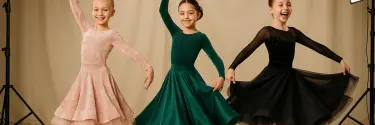
The selection principles are the same. The only difference is sizing and length: for girls aged 8–14, a fringe skirt with 10–15 cm fringe is ideal and looks proportionate. For younger dancers, lighter and less dense fringe is also preferable — it's more comfortable at early training stages.
For adult dancers there are no restrictions — choose any length and density based on your programme and training level.
Popular fringe skirt models at MakGrace
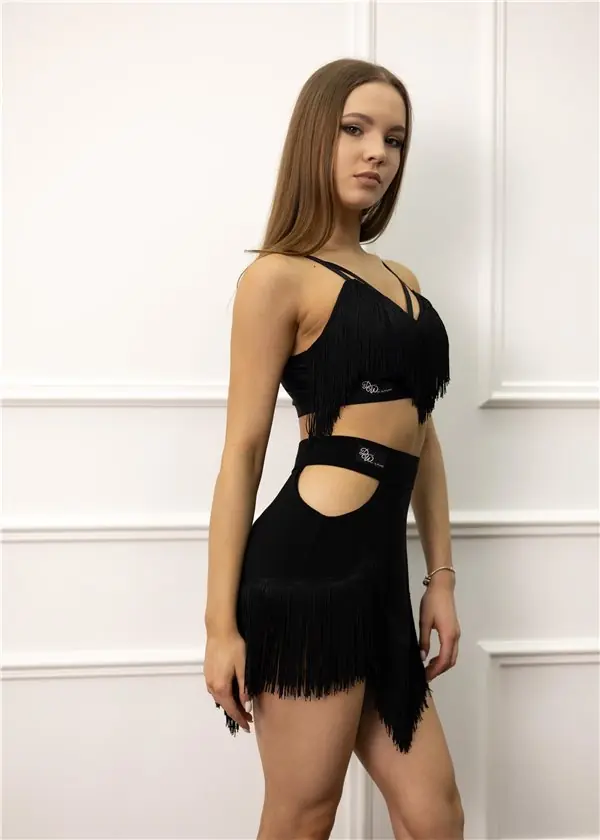
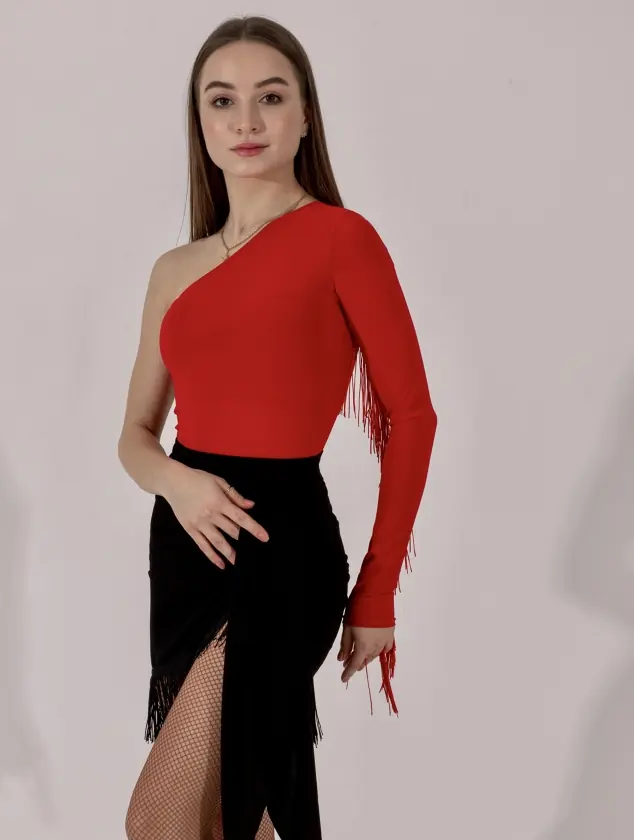
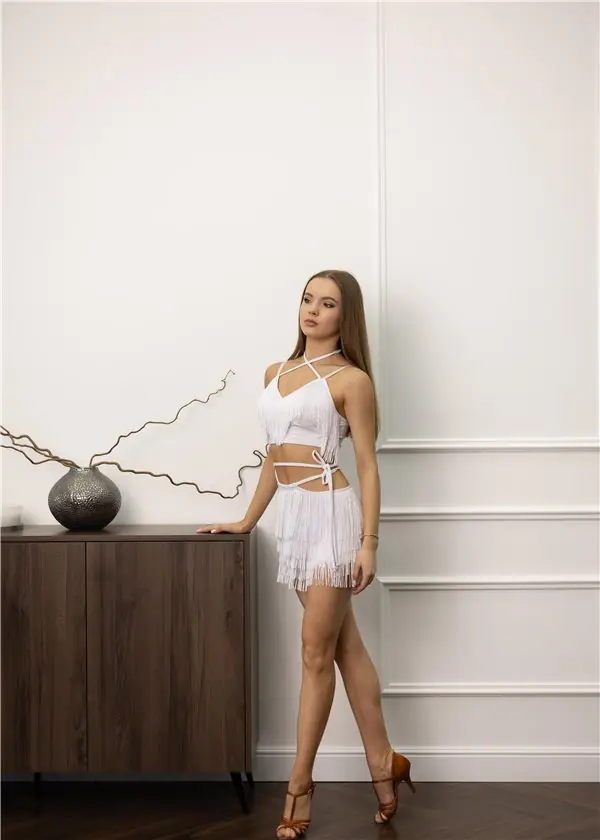
For girls, Ptashka Style offers the «Flamenco» fringe skirt — with decorative metal details and front fringe. Available in three colours: black, khaki, burgundy.
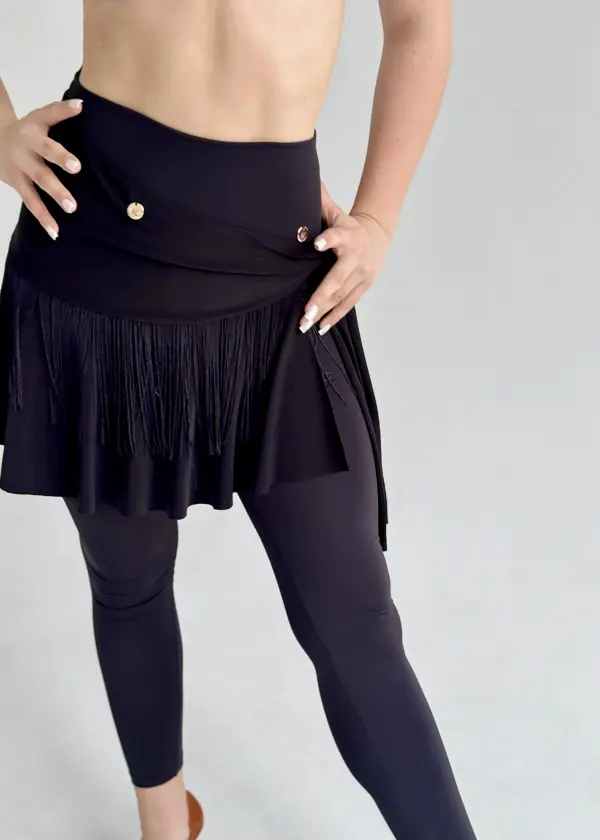
Where to find fringe skirts and dresses
At MakGrace you'll find fringe skirts and dresses from DW.DANCEWEAR, SHOK and Ptashka Style: black, white and coloured options for training and performance. Browse the women's skirts catalogue or the girls' section.
If you're putting together a complete training wardrobe — read our guide: Latin vs Standard: Training Wear for Girls.
Frequently Asked Questions
What fringe length is best for training?
Short fringe of 10–15 cm is ideal for training: it doesn't interfere with footwork, doesn't overheat in the studio, and is easy to train in. Medium fringe of 15–22 cm works for both training and performance. Long fringe of 25–30+ cm is for competitions and shows only — it takes time to get used to.
What is the difference between a fringe skirt and a fringe dress?
A fringe skirt is worn over a bodysuit and is more practical for training: you can change bodysuits, switch between Latin and Standard, and the coach sees your full body. A fringe dress is an all-in-one look, better suited for performances. For daily practice, a skirt is recommended.
Which base fabric is better — bi-flex or oil fabric?
Bi-flex fits more closely, wicks moisture better, and holds its shape after hundreds of training sessions — the best choice for adult dancers. Oil fabric is softer and less rigid against the skin, making it more comfortable for younger dancers. Both materials hold their shape well.
How do you wash a fringe skirt?
Machine wash on a delicate cycle inside a laundry bag, or hand wash in cold water. First wash separately — colours may run. After washing, never wring the fringe: gently press with a towel and hang vertically on a hanger with fringe facing down. Never iron the fringe directly — it can melt or deform.
Are fringe skirts suitable for girls?
Yes, fringe skirts are suitable for girls from age 6–7. For girls aged 8–14, fringe of 10–15 cm is ideal: it looks proportionate, doesn't restrict movement, and is lighter than adult models. MakGrace carries the Ptashka Style Flamenco skirt for girls in three colours starting from 1 400 UAH.
How much does a Latin dance fringe skirt cost?
At MakGrace, fringe skirts for Latin dance start from 1 400 UAH (Ptashka Style for girls) up to 1 985 UAH (SHOK for women). DW.DANCEWEAR models are priced at 1 500–1 700 UAH depending on the style. Options available for training and performance in various colours and fabrics.