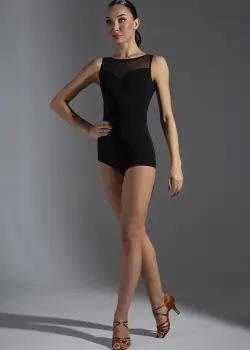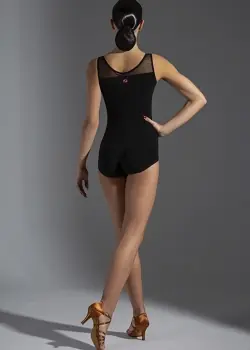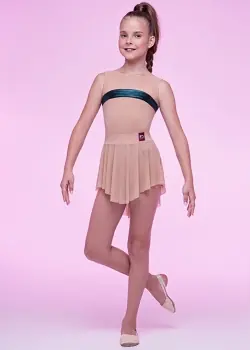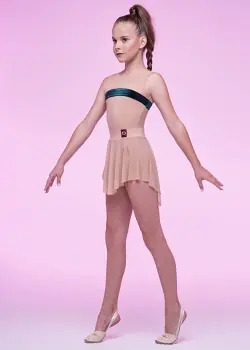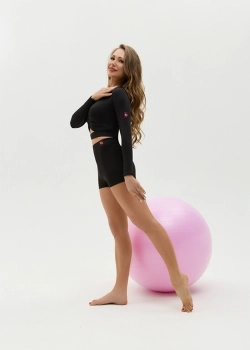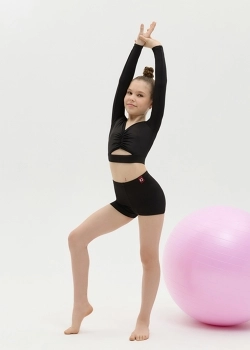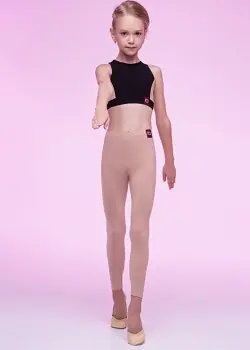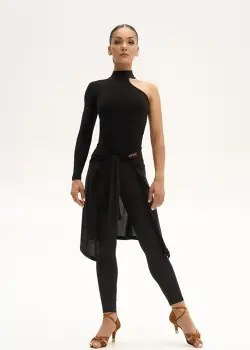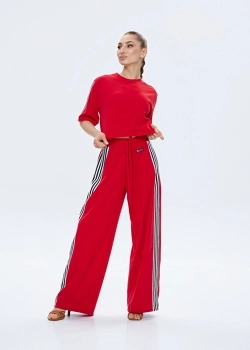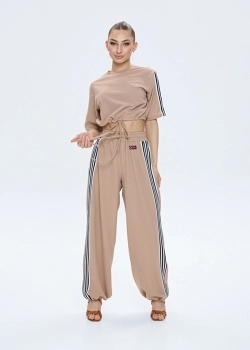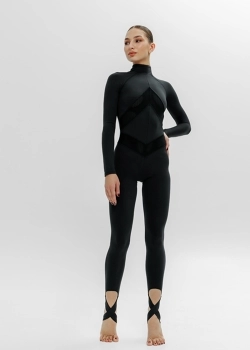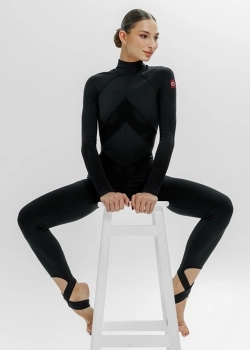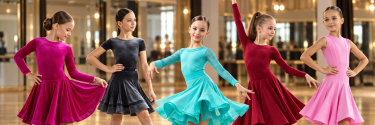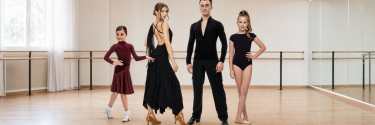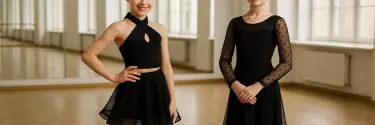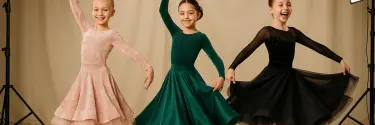
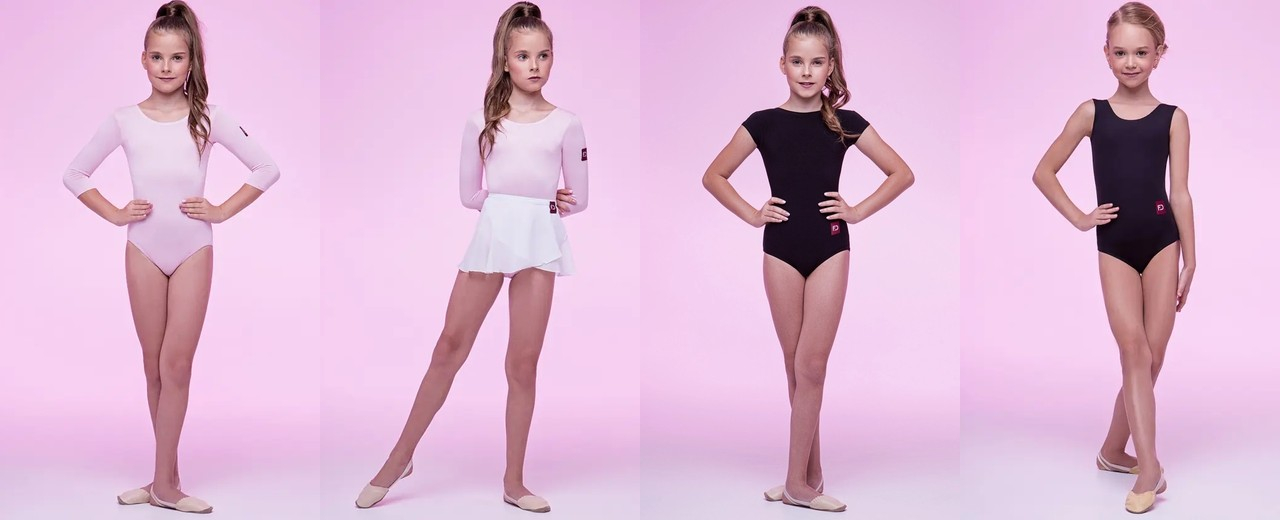
For gymnastics and choreography, most dancers and gymnasts choose a close-fitting leotard or jumpsuit; for more active classes a top with shorts or bike shorts works, and a chiton is added for performances and stage work. One rule matters most: the coach must see the shoulders, back, hips and knees, and the garment must not shift during bends and swings. Below: how to choose the type of garment, sleeve, fabric and size, and which FD Company styles are available at MakGrace.
What to choose: leotard, jumpsuit, top with shorts or chiton
Start with the activity, not the style. It decides how much of the body should be covered and how closely the garment should fit.
| Activity | What to choose | What to check |
|---|---|---|
| Gymnastics, training | Leotard with an open back or sleeveless | Armholes do not dig in, the hem does not ride up in bends, bottom snaps close securely |
| Acrobatics, floor work | Leotard or jumpsuit; shorts or bike shorts with a fixed waistband | Close fit, no loose details that can catch |
| Aerial gymnastics | Jumpsuit or leotard with long sleeves | Covered arms and legs protect the skin from friction; ask the coach about requirements |
| Choreography | Leotard or top with leggings or bike shorts | Knees, feet, hip line and back position stay visible |
| Showcase or performance | A set with a jumpsuit, a chiton over a leotard | Check costume requirements with the coach and the event rules |
Leotard: sleeve, neckline, back and fastening
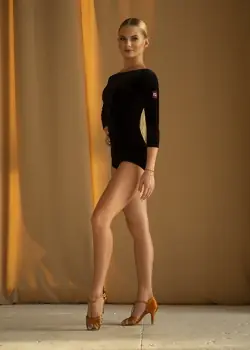
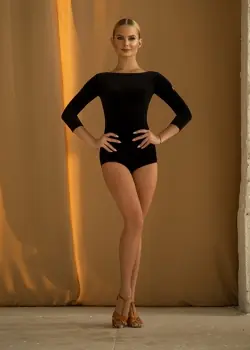
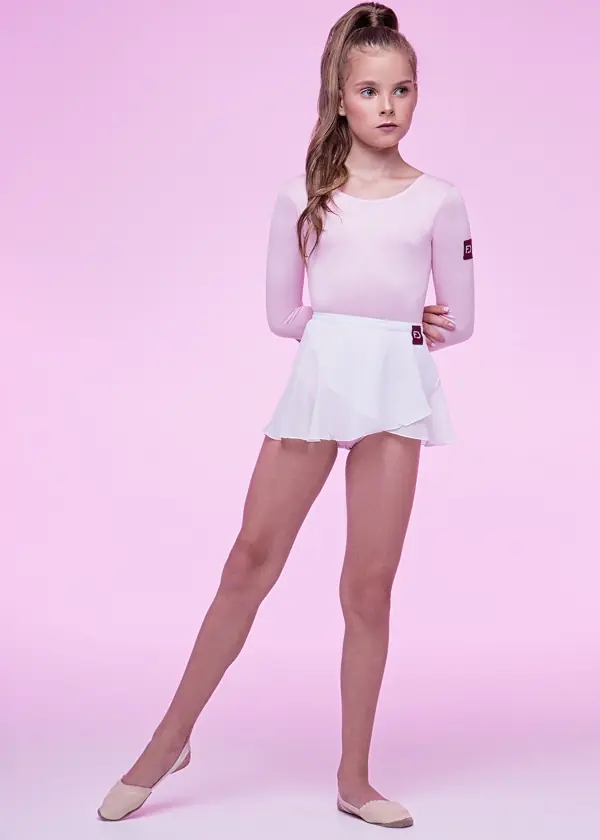
The leotard is the basic piece for gymnastics and choreography. First decide which sleeve works best. Sleeveless gives the most freedom for the shoulders and a clean arm line. Short sleeves are a little warmer and softer on the shoulders. Three-quarter sleeves in cotton knit suit choreography and everyday classes, especially in a cool studio.
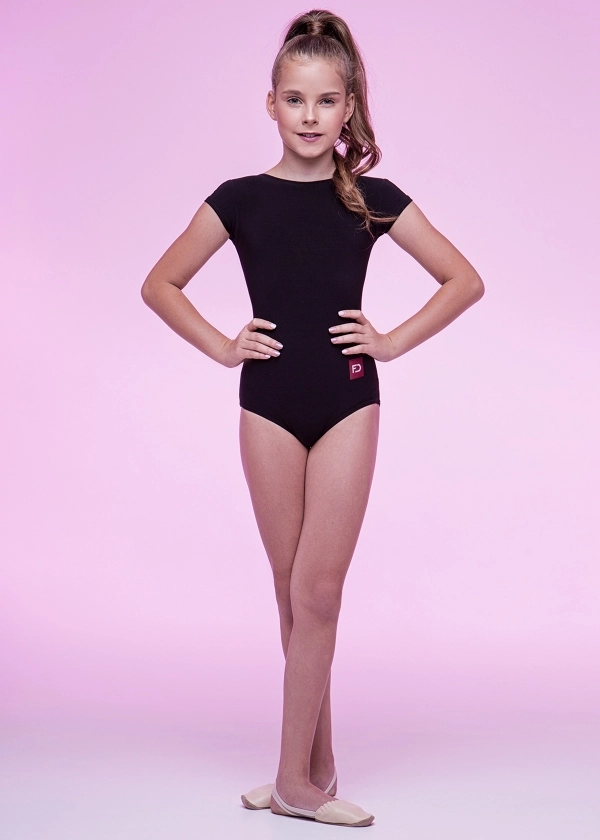
The second criterion is the back and neckline. An open back does not restrict the shoulder blades and lets the coach see posture, while a half-round or round neckline should not squeeze the neck in bends. The third is the fastening. In the FD Company styles reviewed here, leotards close with snaps at the bottom: reliable, but it takes a few seconds in the changing room, so a child should practise fastening them at home.
Jumpsuit and set: when they beat a leotard
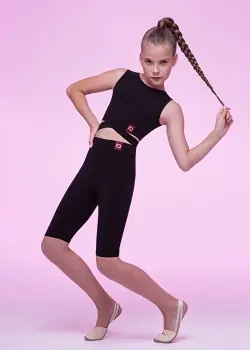
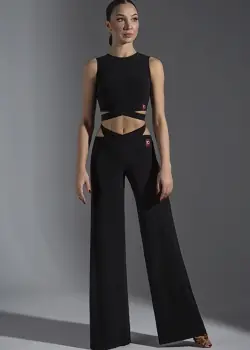
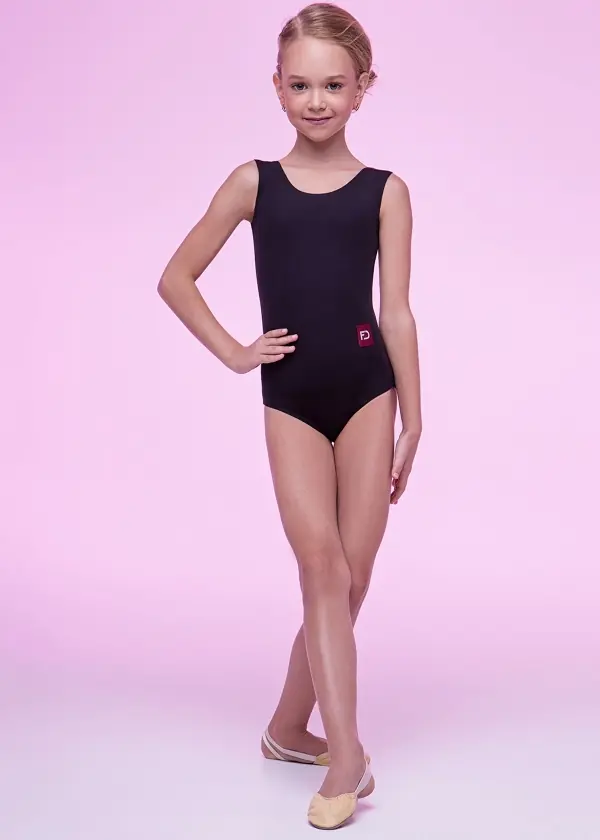
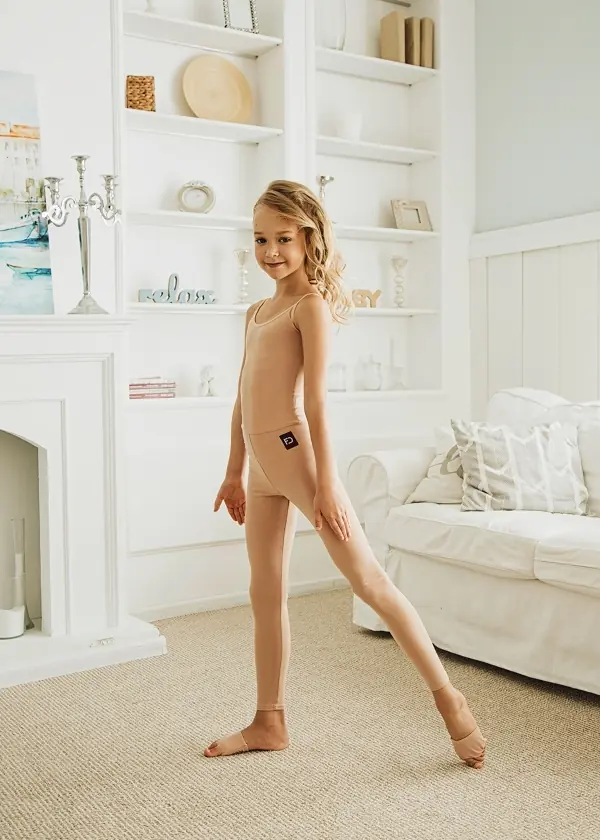
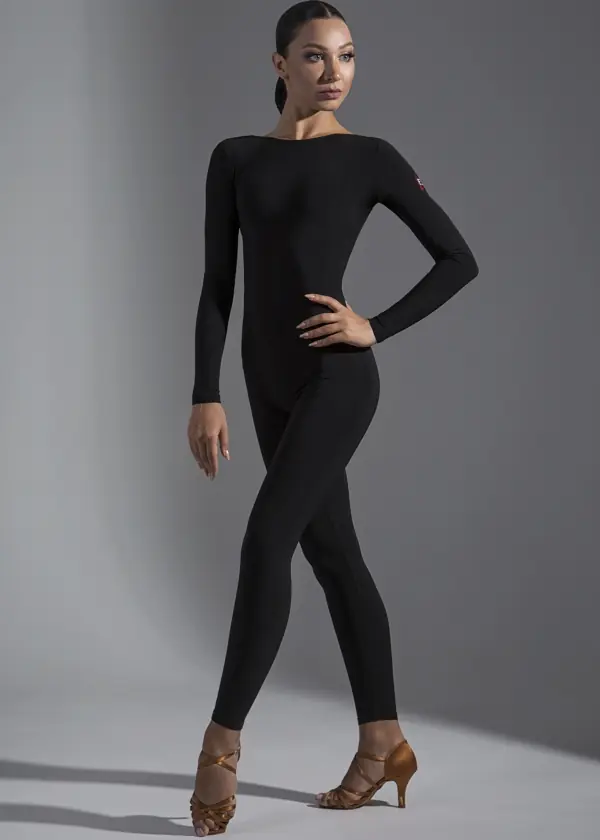
A jumpsuit covers the hips and often the legs, which is why it is chosen for acrobatics, aerial gymnastics, a cold studio and showcase performances. In a sleeveless girls' jumpsuit with a waist seam, the armholes and neckline need soft finishing: on model КН-636/1 GH they are finished with elastic binding, so they do not chafe. The women's jumpsuit КН-1174 has long sleeves and an open back.
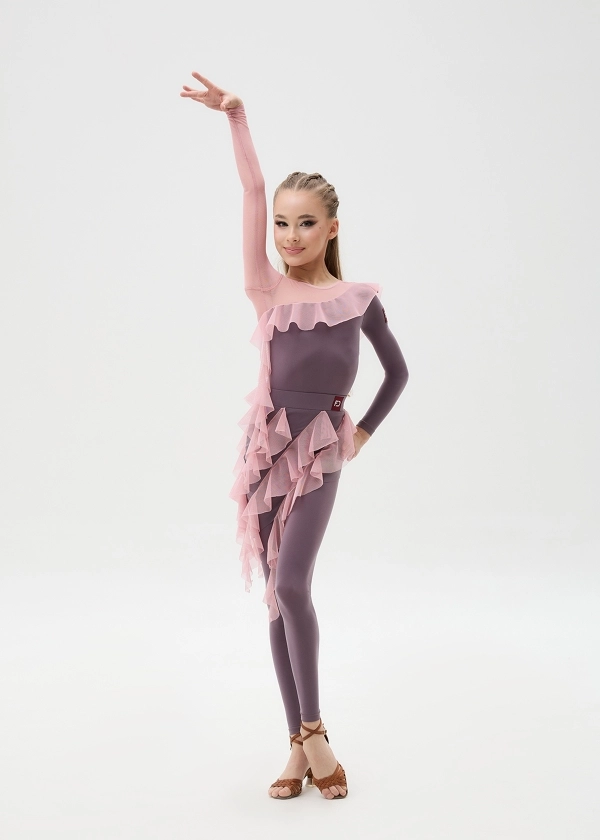
A set such as КТ-1426 KW is a close-fitting jumpsuit with long sleeves and a peplum. It is usually bought for performances or showcase classes rather than daily training, because it is harder to care for. For an ordinary class a leotard and shorts are simpler.
Shorts, bike shorts, leggings: the bottom half
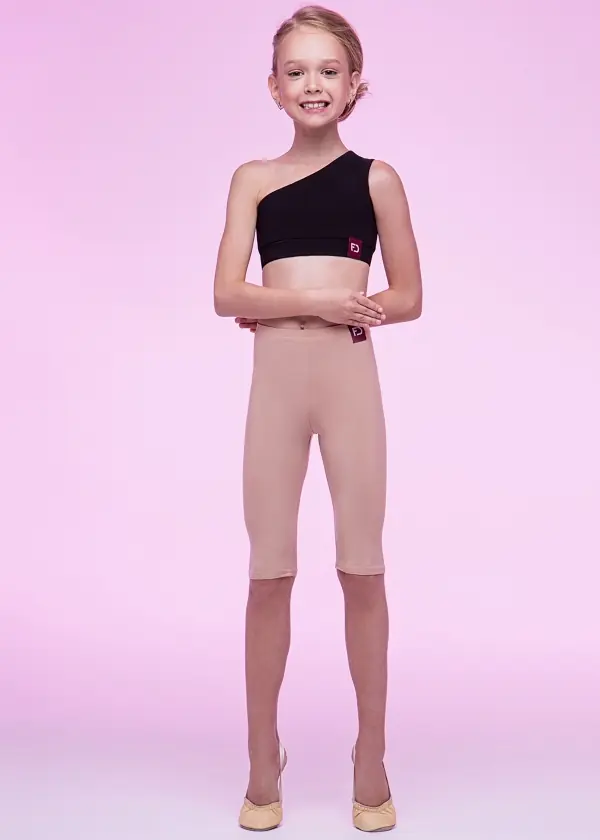
The bottom should sit on the waist and hips without twisting. Bike shorts in smooth stretch jersey with a 2–3 cm folded-in waistband, like ВЛ-50, stay in place and do not dig in. Leggings suit choreography and a cool studio, shorts suit active classes and summer. If you choose a top for class, make sure the waistband of the shorts or leggings does not leave marks on the waist or hide the hip line.
Chiton for choreography
A chiton is a light chiffon skirt or overlay worn over a leotard or top. It adds volume to movement and flows beautifully in turns. Model ХТ-120 in chiffon has an attached tie waistband and a picot-stitched hem. A chiton is not needed for an ordinary class: it covers the knees, and the coach needs to see exactly those. Use it for staging, performances and rehearsals.
Fabrics: smooth jersey, bi-flex, cotton knit, chiffon, mesh
In the FD Company gymnastics and choreography range, these materials appear most often:
- Smooth stretch jersey («butter» knit) – soft, smooth and very stretchy. The most common choice for leotards, jumpsuits and bike shorts.
- Bi-flex – dense stretch knit that keeps its shape and colour, suited to training that means frequent washing.
- Cotton knit – breathable and gentle on the skin; comfortable for choreography and everyday classes.
- Chiffon – a light, flowing fabric for chitons and skirts. Not for active training.
- Soft mesh – inserts for sets and performance styles that add lightness and a sheer look.
For more on fabric content and behaviour, read how to choose the best fabric for ballroom practice wear.
How to choose the size
For leotards and jumpsuits, size depends not only on height but also on torso length. Take a few measurements and compare them with the size chart on the product page:
- Height – standing without shoes, back against a wall.
- Chest, waist and hip circumference – chest at the fullest point, waist at the narrowest, hips at the widest; do not pull the tape tight.
- Torso length – from the shoulder through the crotch to the same shoulder. For leotards and jumpsuits this is the critical measurement: if it is too short, the garment rides up and pulls.
Reference points from product pages: in set КТ-1426 KW the model is 141 cm tall and wears size 32; in top ТП-1467 KW she is 147 cm and wears size 34. In FD Company descriptions, children's sizes run 28–34 and women's 36–52. Do not buy a leotard to grow into: an oversized garment bunches and interferes with movement. If the measurements fall between two sizes, message the MakGrace team and we will advise on the specific model.
Caring for a leotard or jumpsuit
Start with the label of the specific garment. The general recommendation is a gentle wash at up to 30 °C with a mild detergent, no bleach, strong spinning, radiators or direct sun. Fasten the snaps before washing so they do not catch the fabric. After class, do not leave a damp leotard in a closed bag: let it air.
Common mistakes
Most unsuccessful purchases for gymnastics and choreography repeat the same patterns:
- A leotard to grow into. Folds, chafing and constant adjusting during class.
- Height only, no torso length. The leotard rides up at the shoulders while the leg opening digs in.
- An everyday sports top instead of a dance one. It does not stay in place in swings and bends.
- A chiton for every class. It covers the knees and stops the coach from seeing technique.
- One set for the whole week. With three to five classes a week you need at least two leotards so one can dry.
- Buying for a competition without checking the rules. Before the start, read the regulations and ask the coach.
What to buy first
Save this list before shopping – it is easy to show to the coach:
- Gymnastics, first class: a leotard with bottom snaps and bike shorts or shorts.
- Acrobatics: a leotard and snug shorts with a fixed waistband; a jumpsuit for a cold studio.
- Aerial gymnastics: a jumpsuit or long-sleeve leotard; confirm details with the coach.
- Choreography: a leotard or top with leggings; add a chiton for performances.
- Several classes a week: two leotards in rotation.
If you are building a wardrobe for a child who also does ballroom dance, read what to buy first for a girl starting ballroom training and how to choose a dance top or leotard.
Where to find FD Company gymnastics and choreography wear
At MakGrace the clothes are sorted into categories, so you do not need to scroll the whole catalogue. All links below open with the FD Company brand filter already applied:
- Gymnastics and choreography – the whole section
- Girls' leotards and chitons and skirts
- Girls' jumpsuits, shorts and bike shorts, tops
- Women's gymnastics and choreography section
For the brand history, sizing logic and other lines, see our complete FD Company guide, and for every model of the brand visit the FD Company page at MakGrace.
FD Company styles for gymnastics and choreography
Below are real items from the catalogue. Check the product page for sizes, colours and the current price – the range is updated regularly.
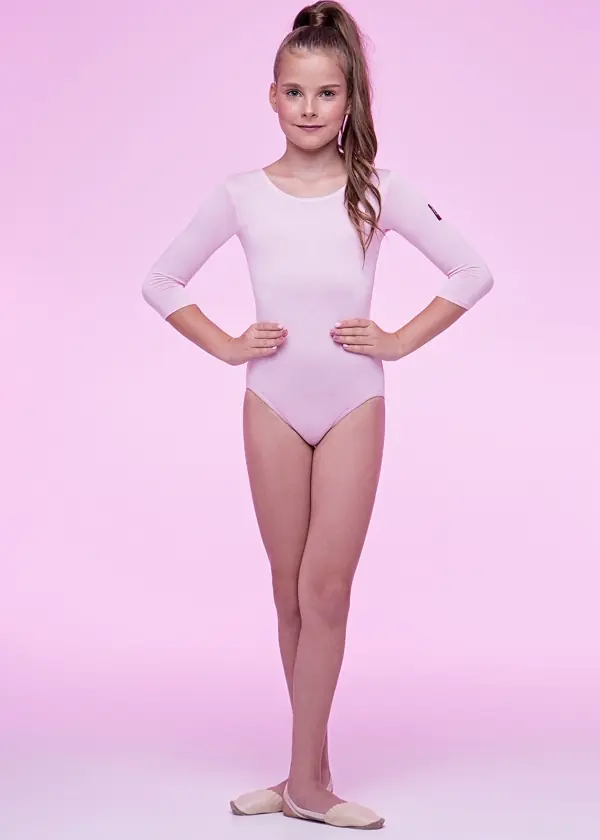
How to put your own set together
Start with the activity: pick a leotard or jumpsuit, add shorts or leggings, and keep the chiton for performances. All FD Company gymnastics and choreography styles are collected in the Gymnastics and Choreography section; if you are unsure about size, message the MakGrace team with your measurements.
Frequently asked questions
Which leotard should I choose for a girl in gymnastics?
For daily classes choose a close-fitting leotard with an open back or no sleeves, in stretch jersey or bi-flex, with bottom snaps. The armholes should not dig in and the hem should not ride up in bends. Choose the size by height and torso length, not to grow into.
What is the difference between a jumpsuit and a gymnastics leotard?
A leotard covers the torso; a jumpsuit also covers the hips and often the legs. A jumpsuit is chosen for acrobatics, aerial gymnastics, a cold studio and performances; a leotard for ordinary training where the coach needs to see the legs and hips.
Is FD Company clothing suitable for rhythmic gymnastics?
The styles in the Gymnastics and Choreography section are designed for training and performances in gymnastics and choreography. For competitions, check the regulations and your coach's requirements for colour, cut and decoration before buying.
What should you wear to a choreography class?
A leotard or a close-fitting top with leggings or bike shorts. The coach must see the knees, feet, hip line and back position. A chiton or skirt is added for performances or rehearsals rather than ordinary classes.
How do I choose the FD Company size for gymnastics?
Take measurements: height, chest, waist and hips, and for leotards and jumpsuits also torso length. Compare them with the size chart on the product page. Do not buy to grow into; if the measurements fall between sizes, message the MakGrace team.
Which fabric is best for a gymnastics leotard?
For training, stretch knits: smooth jersey for softness and freedom of movement, bi-flex for density and resistance to frequent washing, cotton knit for choreography and everyday classes. Chiffon is for chitons, not for active exercises.
How do I care for a leotard or jumpsuit?
Gentle wash up to 30 °C with a mild detergent, no bleach or strong spinning; do not dry on a radiator or in direct sun. Fasten the snaps before washing. After class let the garment air instead of leaving it damp in a bag.
Where can I buy FD Company gymnastics and choreography wear?
At MakGrace, a specialist dancewear store and authorised FD Company seller. Open the Gymnastics and Choreography section with the FD Company filter or the brand page; we ship within Ukraine and internationally.