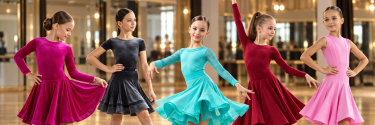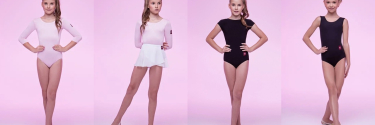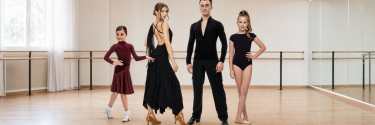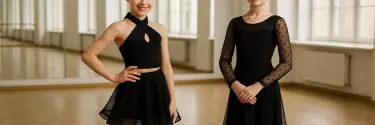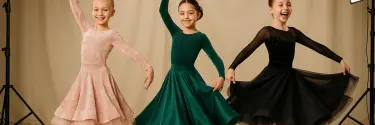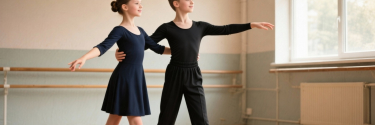
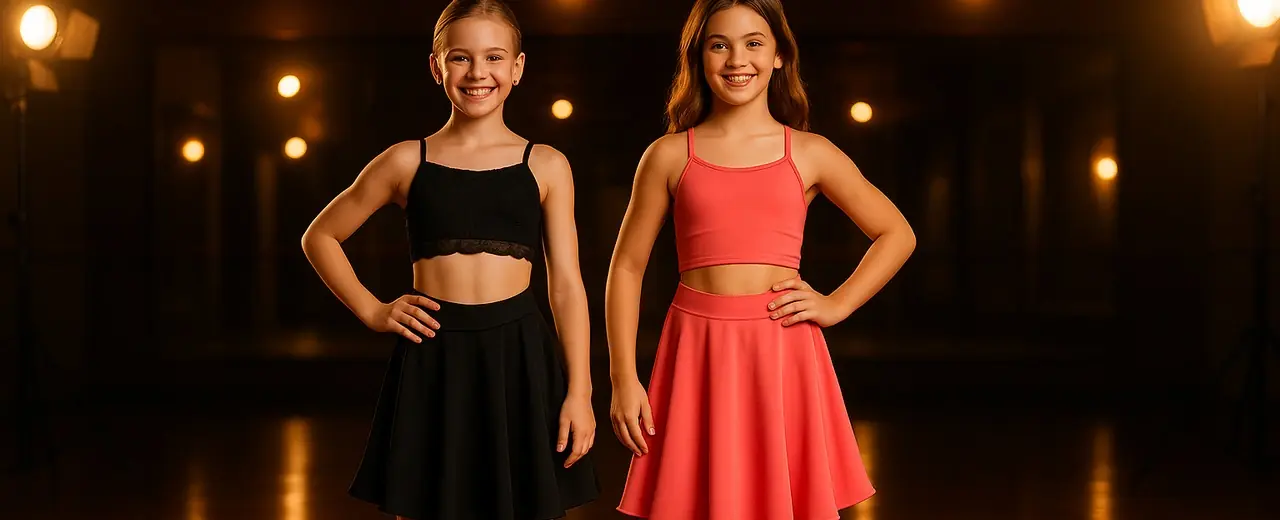
For girls under 8–9 training in ballroom dance, a leotard (bodysuit) is the practical choice — it won't ride out of the skirt during spins. For girls 9–10 and older, a separate dance top is easier to put on and offers more styling options. Either way, the key requirements are the same: at least 80% polyester or nylon with elastane, flat seams, and the right size by height.
Top vs. leotard: what is the difference?
At first glance they look alike — fitted, worn with a skirt. But they behave very differently in training.
| Feature | Leotard (bodysuit) | Dance top |
|---|---|---|
| Rides out of skirt? | No — snap fasteners at the hem | Can, if the skirt waistband is loose |
| Easy to change? | Snaps take extra time | Quick to take off |
| Suitable for under 8? | Yes — stays in place during movement | Yes, paired with leggings |
| Styling variety | Less flexible | More — easy to mix and match |
| Dance styles | Any style | Latin, lyrical, modern |
| Price range | €25–€42 | €18–€33 |
Practical rule: up to 8–9 years old — go with a leotard: it stays in place and does not interfere with movement. From 9–10 years, when a girl trains more consciously, a separate top gives more freedom in styling.
What to look for when choosing
Fabric — the most important criterion
Dance clothing must stretch in four directions. The optimal composition for training: 80–85% polyester or nylon + 15–20% elastane (spandex). This combination does not wrinkle, wicks moisture, and holds its shape after 50+ washes. Matte jersey ("maslo" fabric) is a dense elastic knit that looks great on stage. Avoid cotton as the main fabric — it is heavy, stretches without recovery, and takes a long time to dry after sweating.
Seams
Flat seams are a must. Regular overlocked seams on shoulders and back irritate the skin during active turns. Check the inside of the garment before buying.
Necklines and cut
For Latin dance — open back, thin or no straps, cutouts. For Standard — closed back, wider straps or sleeves. There is usually no strict dress code at practice, but dressing in the style of your dance helps you get into the right mindset faster.
Latin vs. Standard — different requirements for tops
| Latin (Samba, Cha-Cha, Rumba, Jive) | Standard (Waltz, Tango, Foxtrot) | |
|---|---|---|
| Back | Open or mesh panel | Covered, lace details |
| Shoulders | Bare or thin straps | Covered or wide straps |
| Midriff | Exposed or sheer | Covered |
| Details | Fringe, rhinestones, bold colours | Ruffles, lace, muted tones |
There is usually no strict dress code at practice — teachers value comfort and mobility. At competitions, requirements for Juvenile A (under 7) are still quite lenient; from Juvenile B and Junior, compliance with WDC or WDSF regulations is required. More on costume rules: fringe skirt for Latin dance: a complete guide.
Children's dance clothing size guide
| EU Size | Height | Age (approx.) | Chest circumference |
|---|---|---|---|
| 98–104 | 98–104 cm | 3–4 years | 52–56 cm |
| 110–116 | 110–116 cm | 5–6 years | 58–62 cm |
| 122–128 | 122–128 cm | 7–8 years | 64–68 cm |
| 134–140 | 134–140 cm | 9–10 years | 70–74 cm |
| 146–152 | 146–152 cm | 11–12 years | 76–80 cm |
| 158–164 | 158–164 cm | 13–14 years | 82–86 cm |
If a child is between sizes — go bigger. A top that is too tight restricts breathing and arm movement; one that is too loose looks untidy and makes it harder for the teacher to assess technique. Always check the size chart for the specific model when ordering online.
Dance tops and leotards for girls at MakGrace
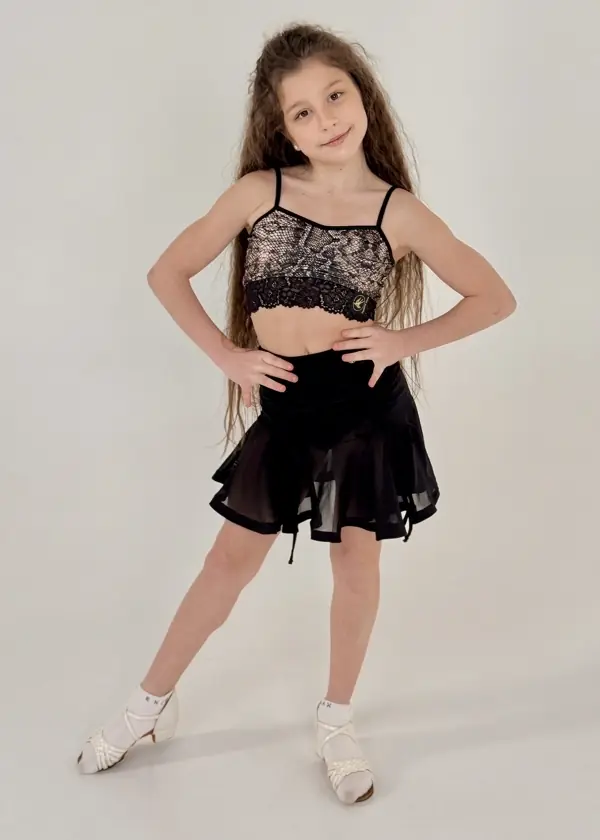
Ptashka Style — new season models for girls
Ptashka Style designs and manufactures training and performance dancewear in Ukraine. The new girls' models are built for active training — decorative elements do not interfere with movement. Browse the full brand range: Ptashka Style at MakGrace.
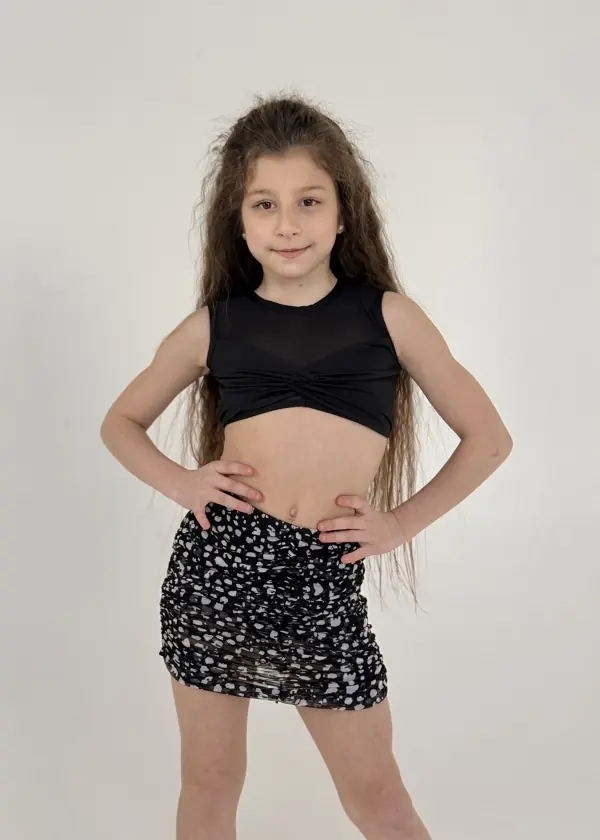
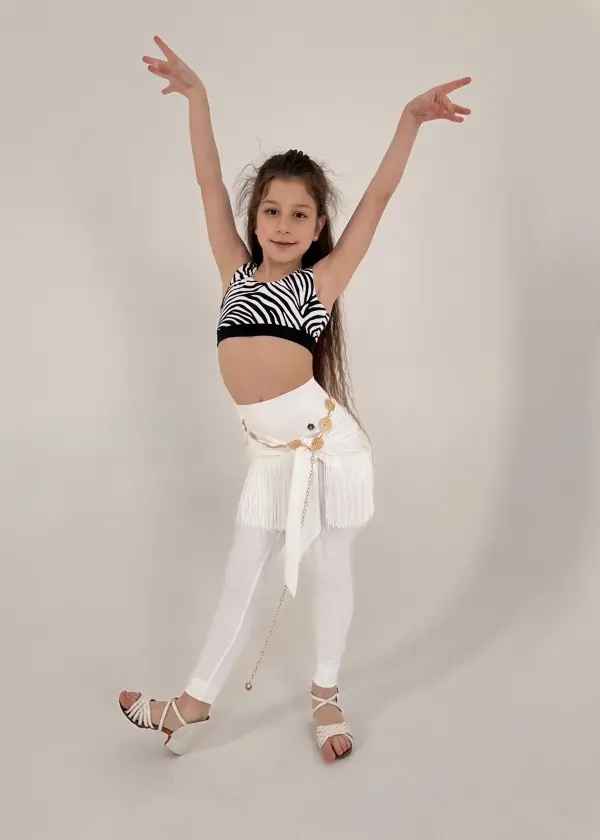
DW.DANCEWEAR — built for everyday training
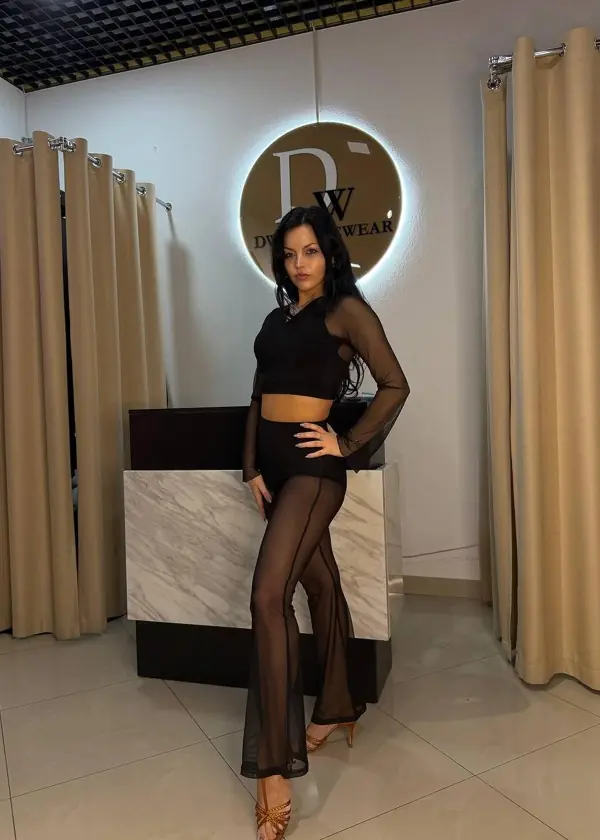
DW.DANCEWEAR focuses on practical training models: garments hold their shape and colour even with frequent washing. Browse all girls' tops or girls' leotards and bodysuits.
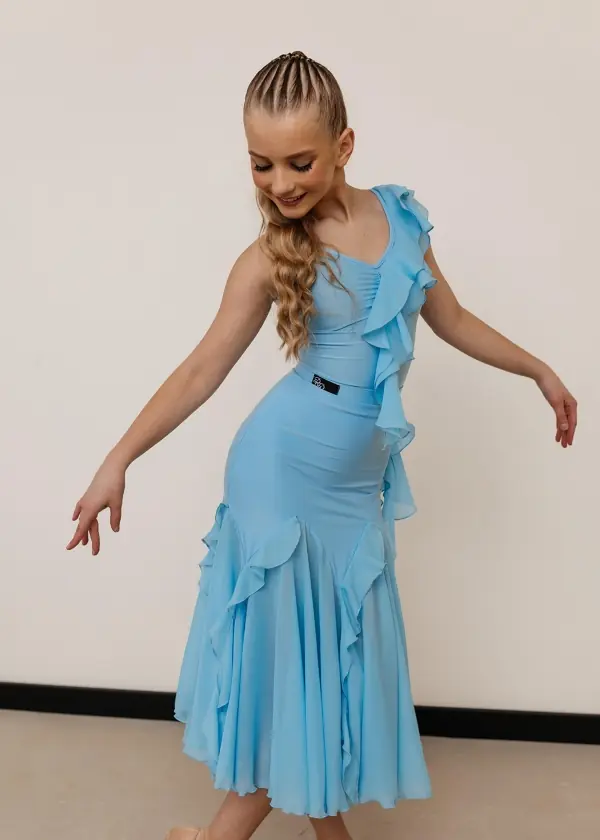
What else to pair with a dance top or leotard
A top or leotard is just one part of the training look. Common pairings include:
- Girls' skirts — practice skirts with or without fringe; worn over a leotard or paired with a top.
- Dance leggings — compression leggings in skin tone to wear under a skirt or for practice without a skirt.
- Sets — ready-made outfits (top + skirt or leotard + skirt) with balanced proportions from one brand.
- Tunics — for Standard training or as a warm-up layer over the main outfit.
If you are putting together a first training wardrobe, also read: how to choose dance tops and skirts for girls in ballroom training. For boys' training wear: boys' ballroom dance trousers — comfort, fit, performance. Full girls' collection: Kids Girls section.
Frequently asked questions
What is the difference between a dance top and a leotard for ballroom dance?
A leotard (bodysuit) has snap fasteners at the bottom hem and will not ride out of the skirt during movement or spins. A dance top is a separate upper garment worn tucked in or over the skirt. For girls under 8–9, a leotard is more comfortable at practice; older girls often prefer separate tops for easier dressing and more styling options.
What fabric is best for a girls' dance top?
Optimal composition: 80–85% polyester or nylon + 15–20% elastane (spandex). This combination stretches in all directions, does not wrinkle, dries quickly, and holds its shape after frequent washing. Avoid cotton as the main fabric — it is heavy, stretches without recovering, and takes a long time to dry after sweating.
Can a regular sports top be used instead of a dance top?
For a trial lesson or home practice — yes. But for regular training and especially competitions, a standard fitness top will not do: it does not meet competition regulations and lacks the design features specific to ballroom dance. A dance top is designed with the movement requirements of Latin or Standard in mind.
How do I choose the right size dance top for a girl?
Go by the child's height, not age. Measure chest circumference and compare with the size chart for the specific model. If she is between sizes — go bigger: a top that is too tight restricts breathing and arm movement. Always check the brand's size chart when ordering online, as sizing can vary between manufacturers.
How many dance tops or leotards does a girl need for dance classes?
At least 2–3 pieces. With training 3–5 times per week, one is not enough. Practical split: 2 for training (simpler, lower price) and 1 for performances or open lessons (more decorative). This reduces wear and ensures there is always a clean alternative.
From what age does a girl need her own dance top?
From the very first class. Even at 4–5 years old, proper dancewear helps the teacher see posture and movement quality. Start with a leotard and skirt — it is the most practical starter set for young dancers. A gym T-shirt or school blouse provides neither the right look nor the mobility needed for dance lessons.
Which leotard is better for Latin and which for Standard?
For Latin — open back, thin straps or strapless, cutouts, bold colours or lace inserts. For Standard — covered back, wider straps or sleeves, muted tones. At practice these are guidelines, not rules; at competitions from Juvenile B and Junior — compliance with WDC or WDSF regulations is required.