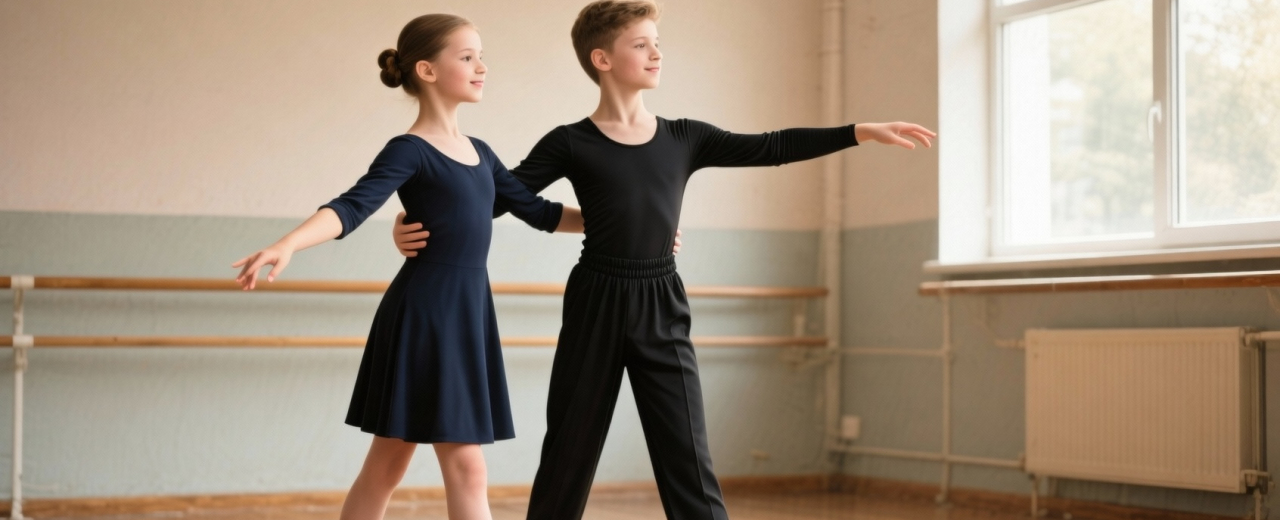
How to choose ballroom dancewear for kids and teens: a complete guide for parents and coaches (2025)
No fluff — what you really need for classes and competitions, how to follow dress codes, nail sizing, pick the right fabrics and shoes, and care for everything.

Starting age & first-month checklist
Most kids start at 4–6. For the first month, choose a working minimum that survives 3–4 practices a week and frequent washing:
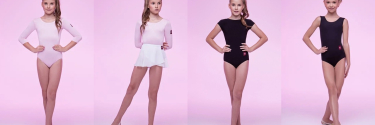
- Girl: leotard/swimsuit + light skirt or practice dress; tights/socks.
- Boy: elastic trousers + fitted top (T-shirt/long sleeve or body-shirt).
- Footwear: slippers/jazz shoes or kids’ ballroom shoes with a thin sole.
- Accessories: hair tie/net, water bottle, shoe bag.
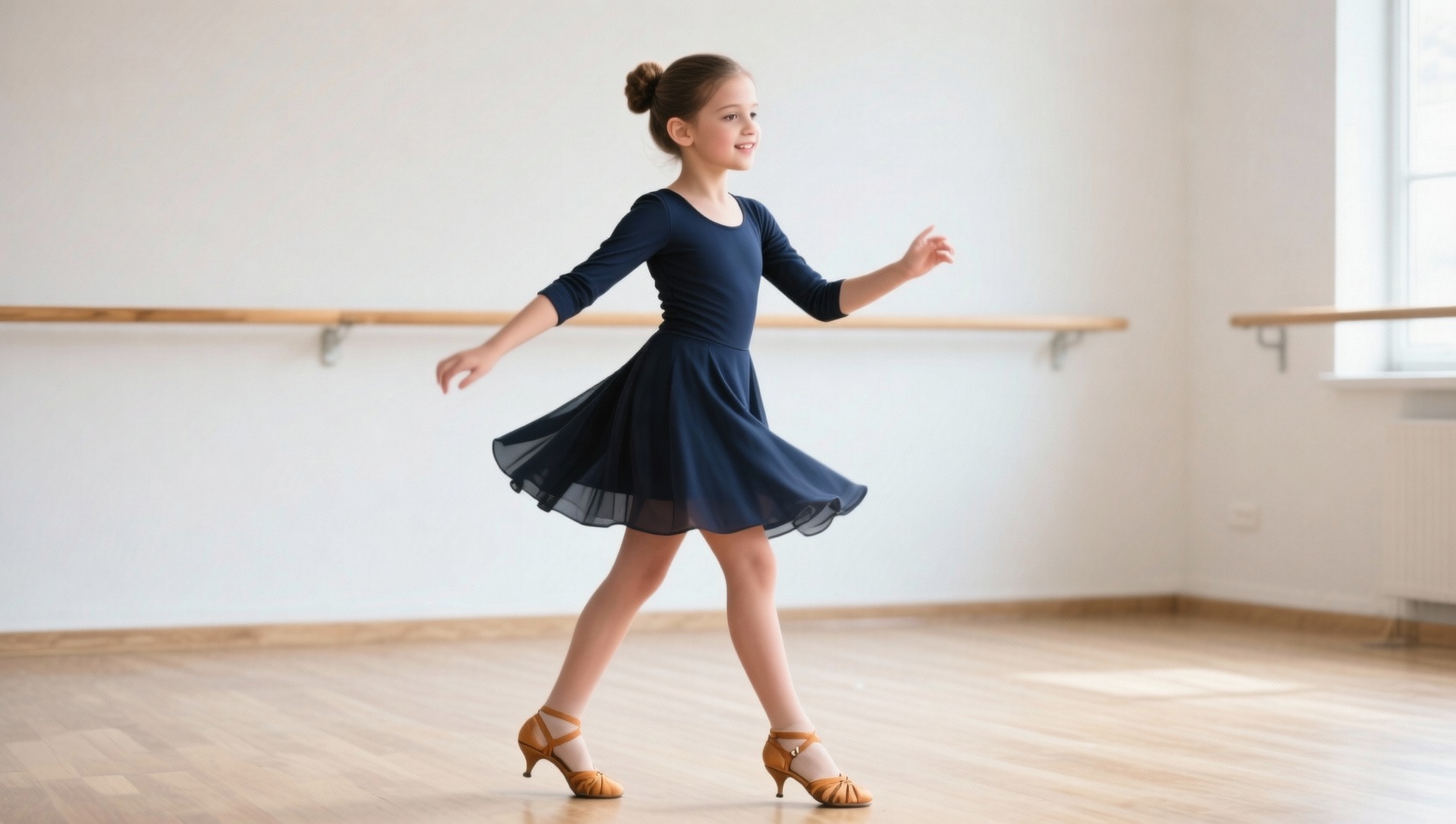
Training outfit: girls
Priorities: freedom of movement, durability, easy care. Skip heavy linings and flashy décor.
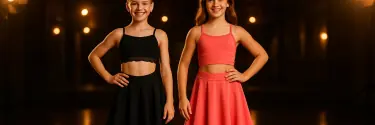
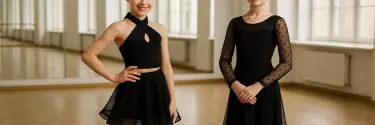
- Base: leotard (short/¾/long sleeve) + knee-length skirt or a practice dress.
- Under skirt: shorts/leggings — nothing distracts during turns and leg swings.
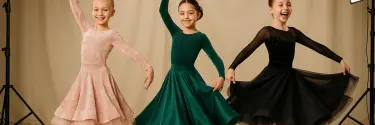
- Colors: solid — black, graphite, dark navy, emerald, burgundy.
Training outfit: boys
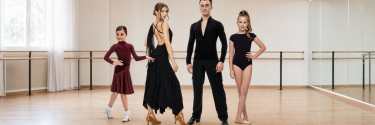
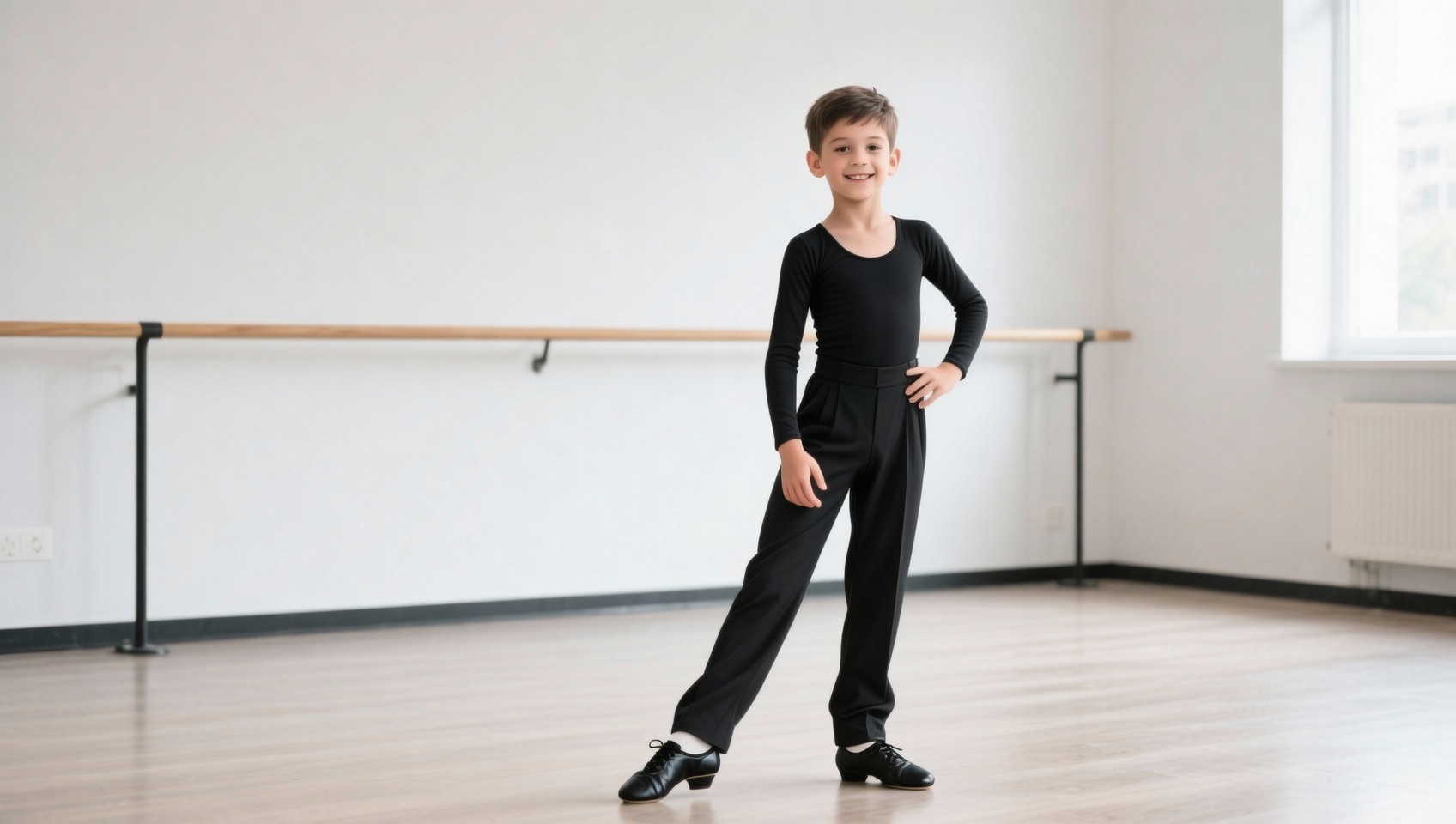
Clean silhouette: top fitted, bottom free but not baggy. A body-shirt stays tucked — convenient.
- Top: T-shirt/long sleeve or body-shirt.
- Bottom: elastic straight-cut trousers; for little starters shorts are acceptable.
- Material: blends with elastane; keep shape and don’t “stiffen” after washing.
Fabrics & fit
- Best: biflex/ITY (“oil”), polyamide/polyester with elastane, bamboo+Lycra — stretch, breathe, keep shape.
- Avoid: cotton without elastane (shrinks and gets heavy), stiff synthetics, rough seams.
- Fit: snug but not tight; elastics shouldn’t dig into waist/thigh.
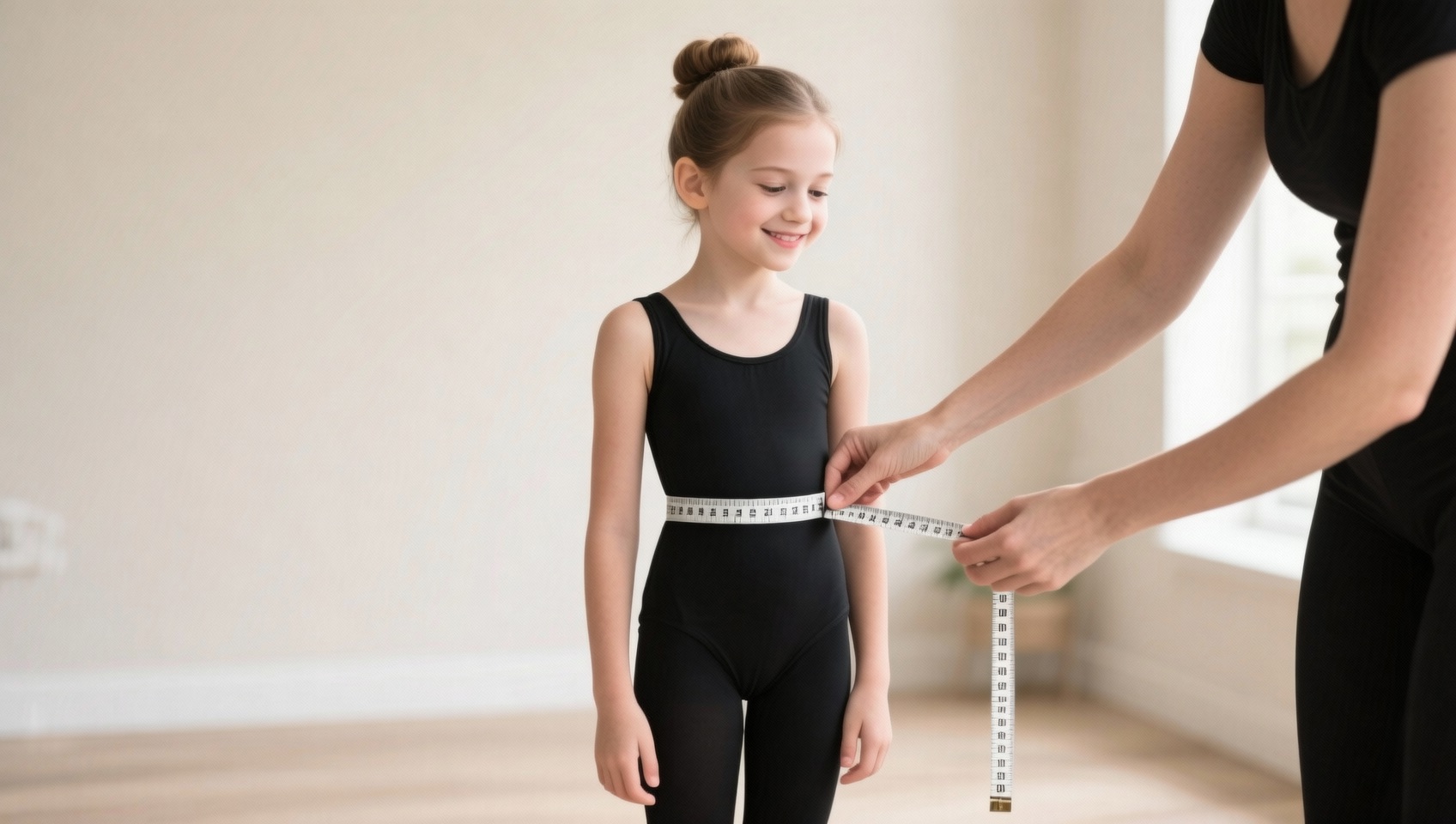
Sizing: how to measure
Measure over underwear or tight garments: height, chest, waist, hips, garment length, sleeve length, inseam. Between sizes — go by chest/waist and fabric composition.
Competition outfit (“basic”)
For younger categories rules are stricter: simple cuts, solid colors, no rhinestones/sequins/feathers, moderate skirt length, covered top. Always check your federation’s regulations and coach’s advice.
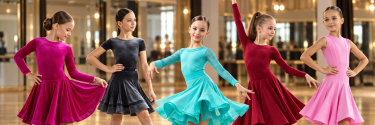
- Girls: solid “basic” dress to the knee, no sparkling décor.
- Boys: white long-sleeve shirt, classic black trousers, black shoes.
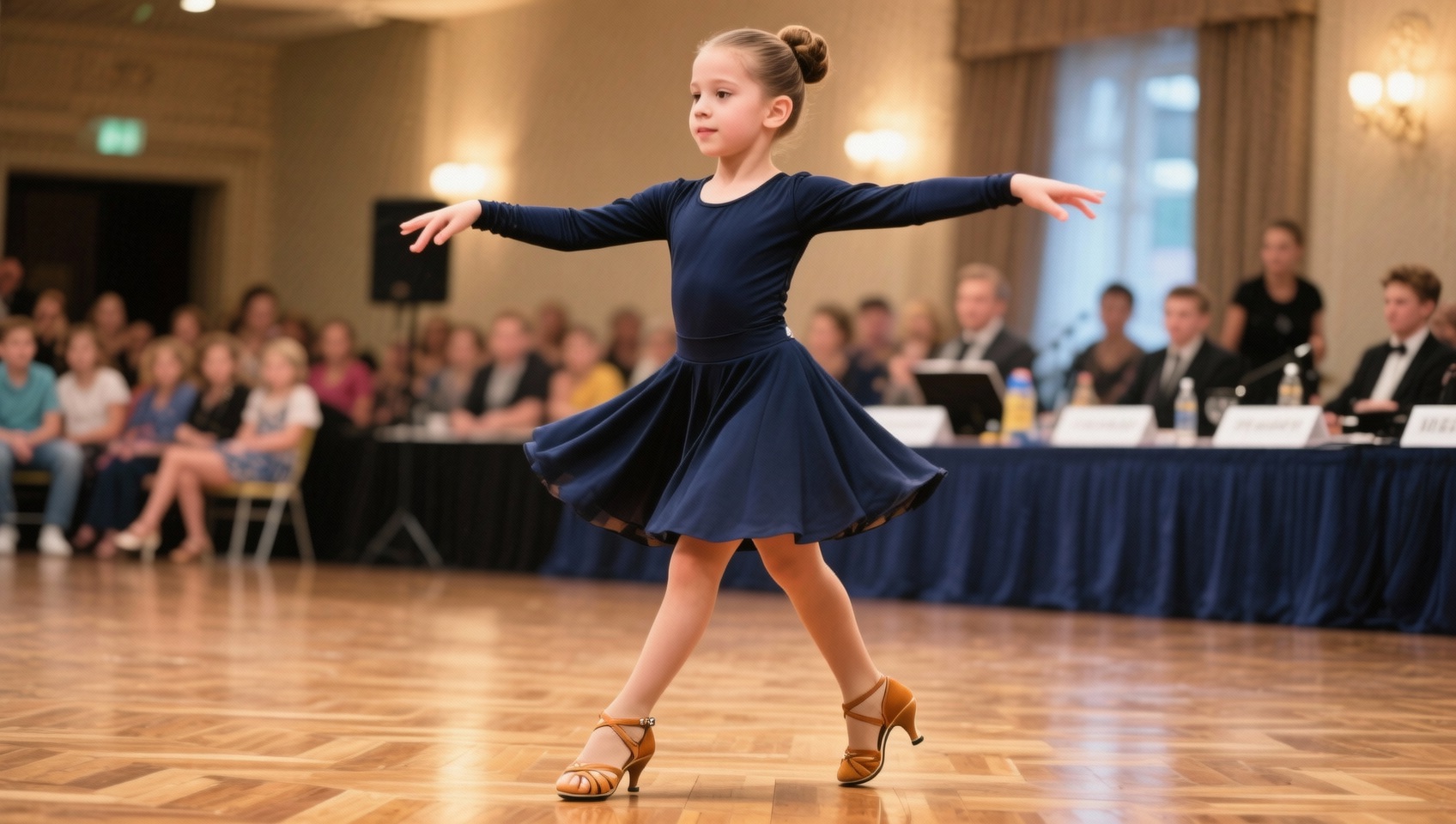
Shoes & accessories
- Sole: suede/leather for parquet — street shoes don’t work.
- Girls: low heel by category; strap secures the heel.
- Boys: classic black ballroom/Latin shoes, heel ~2–2.5 cm.
- Size: true to size; “room to grow” rubs and breaks foot line.
- Hosiery: plain socks/tights; always keep a spare pair.

Care
- Wash at 30 °C, delicate cycle, laundry bag, liquid detergent.
- No bleach or softeners (they clog fibers, reduce elasticity).
- Dry flat/on hangers away from radiators and direct sun.
- Store sets separately; for shoes — bag, suede brush.
Budget: season set + checklist
A 6–9-month plan saves money and nerves:
- Training — 2 tops (leotard/top) + 2 bottoms (skirt/leggings/trousers) + 1 practice dress.
- Training shoes (or competition ones, but keep them for the floor) + shoe bag.
- Socks/tights — 3–4 pairs in rotation.
- Hair accessories + basic cosmetics/lacquer (age-allowed).
- Competition set (approved by coach) + spare tights/socks.
Common mistakes & how to avoid them
- Buying “two sizes ahead.” Result: flapping, hurts technique. Fix: max +1–2 cm in length.
- Cotton without elastane. Result: shrinks, loses shape fast. Fix: modern blends with elastane.
- Practicing in a competition dress. Result: quick wear. Fix: separate practice outfit.
- Shoes “with room.” Result: blisters, broken foot line. Fix: true to size, break in beforehand.
- Ignoring category rules. Result: penalty/disqualification. Fix: check coach & regulations before buying.
FAQ — quick answers
Can my child practice in the competition dress?
How often should we check the size?
Are “with growing room” shoes okay?
Does a basic dress need rhinestones?
Need help choosing?
Send height/chest/waist/hips and practice frequency — we’ll suggest exact practice models and “basic” options for your category.